A single engine, thirty years of imitators
Walk through any British bike show and count how many parallel twins you see. BSA, Norton, Matchless, Royal Enfield, and Triumph itself, all building variations on one idea for the better part of three decades.
That idea has a name attached to it: Edward Turner. In 1937 he showed a 500cc twin called the Speed Twin, and within a decade almost every major British manufacturer was building something close to a copy of it.
This is the story of how one designer, arriving at a nearly broke company, drew an engine so right that it outlived him, outlived the factory that built it, and defined what a British motorcycle was supposed to sound and feel like.
Turner's rise
Edward Turner was born on 24 January 1901 and built his reputation the slow way, through drafting boards rather than shortcuts. By November 1928 he had landed a job as Designer and Engineer at Ariel, where he would go on to create the Ariel Square Four, an engine clever enough to get him noticed well beyond Ariel's own workshops.
Triumph, meanwhile, was in trouble. In 1936 the company split its motorcycle and car businesses and put the motorcycle side up for sale. Ariel's owner, Jack Sangster, bought it and renamed it the Triumph Engineering Company. Turner came along as part of that deal.
He arrived at Triumph (accounts differ on whether this was 1935 or 1936) holding an unusual pile of titles at once: Works Manager, Sales Manager, General Manager, and Chief Buyer. The company was short of cash and short of direction, and Turner was effectively handed all of it to fix. Within a year or two he'd also become Chief Designer and managing director, the man calling both the engineering and the business decisions.
The 1937 Speed Twin
Turner's first real problem at Triumph was vibration. The single-cylinder engines of the day shook hard enough to rattle fillings loose, and Turner's answer wasn't a tweak but a rethink. He split the displacement across two cylinders rising and falling together on a 360-degree crankshaft.
The Speed Twin launched at the 1937 National Motorcycle Show and went on sale for £75, finished in a single color Triumph called Amaranth Red. It wasn't the first British vertical twin (Triumph's own Val Page had drawn one, the model 6/1, back in 1933, and it sold poorly). But it was the first one that actually worked as a product people wanted to buy.
Part of the trick was disguise. Turner knew Triumph's customers were conservative, so he shaped the engine's outer covers to look like a twin-port single rather than something radically new. Under that familiar-looking exterior sat a design that was narrower across the crankcase than Triumph's own single-cylinder Tiger 90, and lighter than the vertical twins that had come before it.
By the numbers, the original Speed Twin was:
The parallel-twin formula
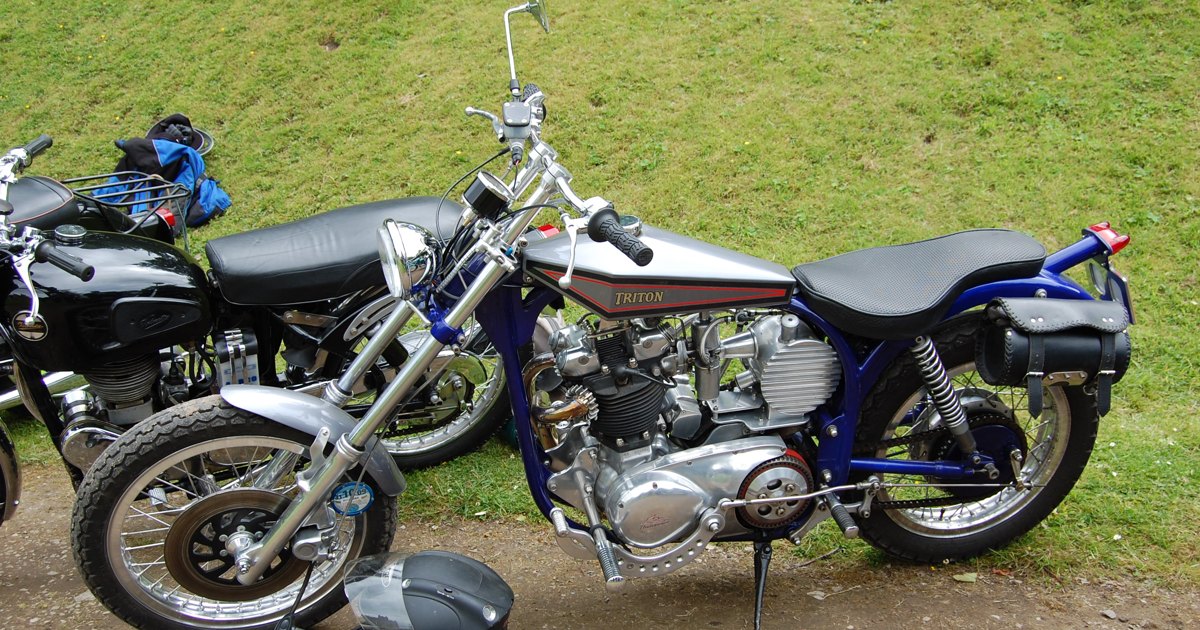
What Turner had actually done was set a template, not just build one good bike. In 1939 he followed the Speed Twin with the higher-performance T100 Tiger, proving the layout could be tuned as well as smoothed out.
Then World War II intervened, and when production resumed after 1945, the Speed Twin's continued sales are often credited with keeping Triumph afloat in a tight postwar market. Other manufacturers noticed. BSA answered first, with the 500cc A7 in 1946. By 1949 Norton, Matchless, and Royal Enfield had all followed with their own 500cc parallel twins built on broadly similar lines.
It's worth remembering that Turner didn't patent the concept of a vertical twin, and he wasn't even first to build one. What he did was solve the practical problems (vibration, bulk, weight) well enough that the format became the default answer for a mid-size British motorcycle engine for the next generation. You can read more on how that spread across the industry in our rundown of British motorcycle industry history.
The Bonneville and the cult that followed
American buyers wanted more, and Turner obliged. The Speed Twin architecture was bored out from 500cc to 650cc to meet US demand for horsepower, a project that also produced the Thunderbird name and its paper-dart logo, both credited to Turner himself as managing director.
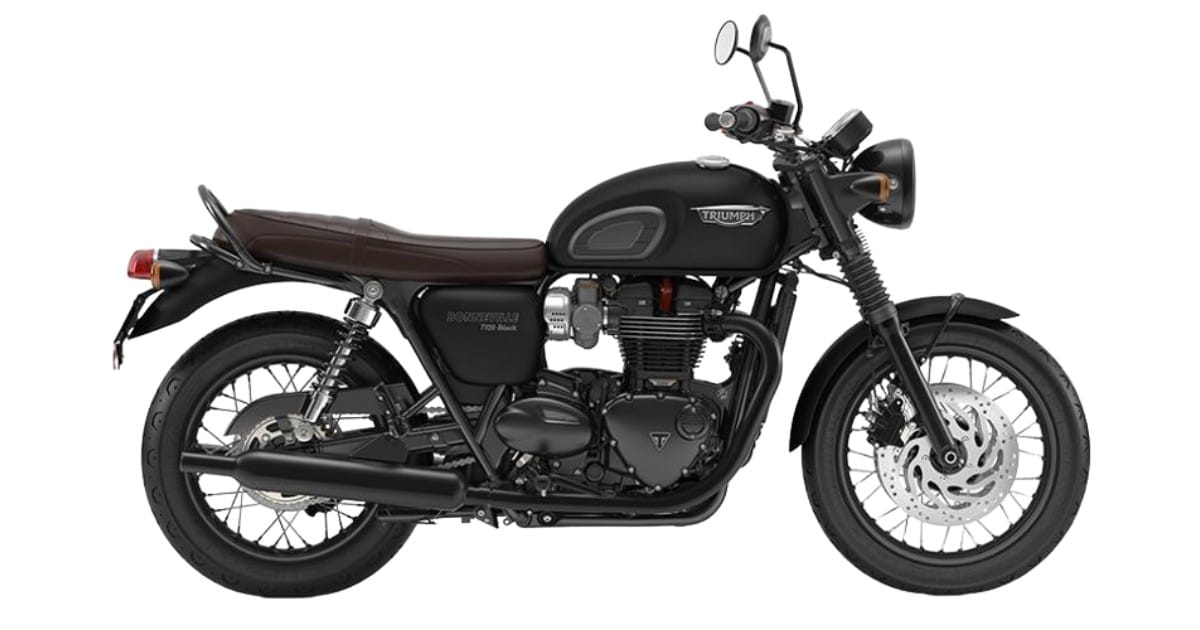
That enlarged twin eventually led to the Bonneville, the model that turned Triumph's parallel twin from a solid commercial platform into something closer to a cult object. Riders and racers embraced it on both sides of the Atlantic, and the Bonneville name became shorthand for British performance in a way that outlasted the company's ownership changes. If you're weighing what a well-kept example is worth today, browse vintage Triumph values and auction results on RunMotoRun.
The Speed Twin itself stayed in production for 28 years, a remarkable run for any single design, and it's generally regarded as the first commercially successful parallel-twin motorcycle. Almost every major manufacturer of the era copied or emulated it in some form.
Turner's wider industry legacy
Turner's parallel twin remained the backbone of Triumph's lineup at Meriden right up until the 1971 introduction of the oil-in-frame design, a shift that marked the end of the layout's unbroken run as the company's default engine. From a 1937 launch to a 1971 redesign is well over three decades of one basic architecture carrying an entire factory's output.
That's a rare thing in motorcycle design. Most engines get a decade of relevance before something newer and lighter replaces them. Turner's twin got adopted, adapted, enlarged, and raced by nearly every rival manufacturer in Britain, and it did all of that while still looking, on the outside, like the single-cylinder engines it was designed to reassure nervous buyers about.
For readers tracing the broader arc of British engineering during this period, our piece on Bultaco's Triumph is a useful companion, as is the full Triumph history page for a model-by-model view of what came after the Speed Twin.
Image credits: Vauxford, CC BY-SA 4.0, via Wikimedia Commons