A death knell four weeks in the making
In the summer of 1968, Triumph and BSA rolled out their new 740cc triples, the Trident and Rocket 3, to genuine critical acclaim. Engineers had been running triple prototypes at Triumph since 1965, four years ahead of the machine that would bury them. Four weeks after launch, Honda showed the CB750.
The CB750 was a 736cc inline-four good for 124 mph, with the first front disc brake fitted to a production motorcycle. It wasn't just quicker or smoother. It was proof that a Japanese firm could out-engineer the British at their own game, sports motorcycling, while also building the thing on a modern production line instead of by hand.
That collision, hand-built British craftsmanship against Japanese mass manufacturing, is the whole story of this industry's rise and fall in miniature. To understand how it got to that point, you have to go back to when Britain simply had no serious rivals.
The golden age: 1900s to the 1950s
British motorcycle production peaked in 1928 at roughly 147,000 machines, a figure built on decades of firms like Ariel, Royal Enfield, and a growing roster of Midlands manufacturers turning out singles and twins for a domestic and imperial market with little competition.
By the 1950s and into the 1960s, motorcycles had become the third most profitable industry in the UK, and motorcycle exports ranked as the country's third-biggest export earner behind cars and spirits. British bikes went everywhere, and for a long stretch, going fast on two wheels meant riding something built in Birmingham or Redditch.
The consolidation started early. In 1951, BSA bought Triumph and became the largest motorcycle manufacturer in the world, building roughly one in four of all motorcycles made anywhere until Honda passed them in 1959. A year later, in 1952, Norton joined Associated Motor Cycles (AMC), folding itself into the same web of mergers that would eventually strangle the independence out of half a dozen once-proud marques.
This was also the era of Vincent's big V-twins, 1000cc machines that were simply the fastest thing on two wheels into the 1950s, and of ton-up singles like the BSA Gold Star and Velocette Venom that defined a generation of café racer culture. Read more on the roots of that scene in our piece on café racer culture.
The American export boom
Postwar Britain found its best customer three thousand miles away. American riders bought Triumph Bonnevilles, BSA Gold Stars, and Norton twins by the boatload, and for a while it looked like an inexhaustible market.
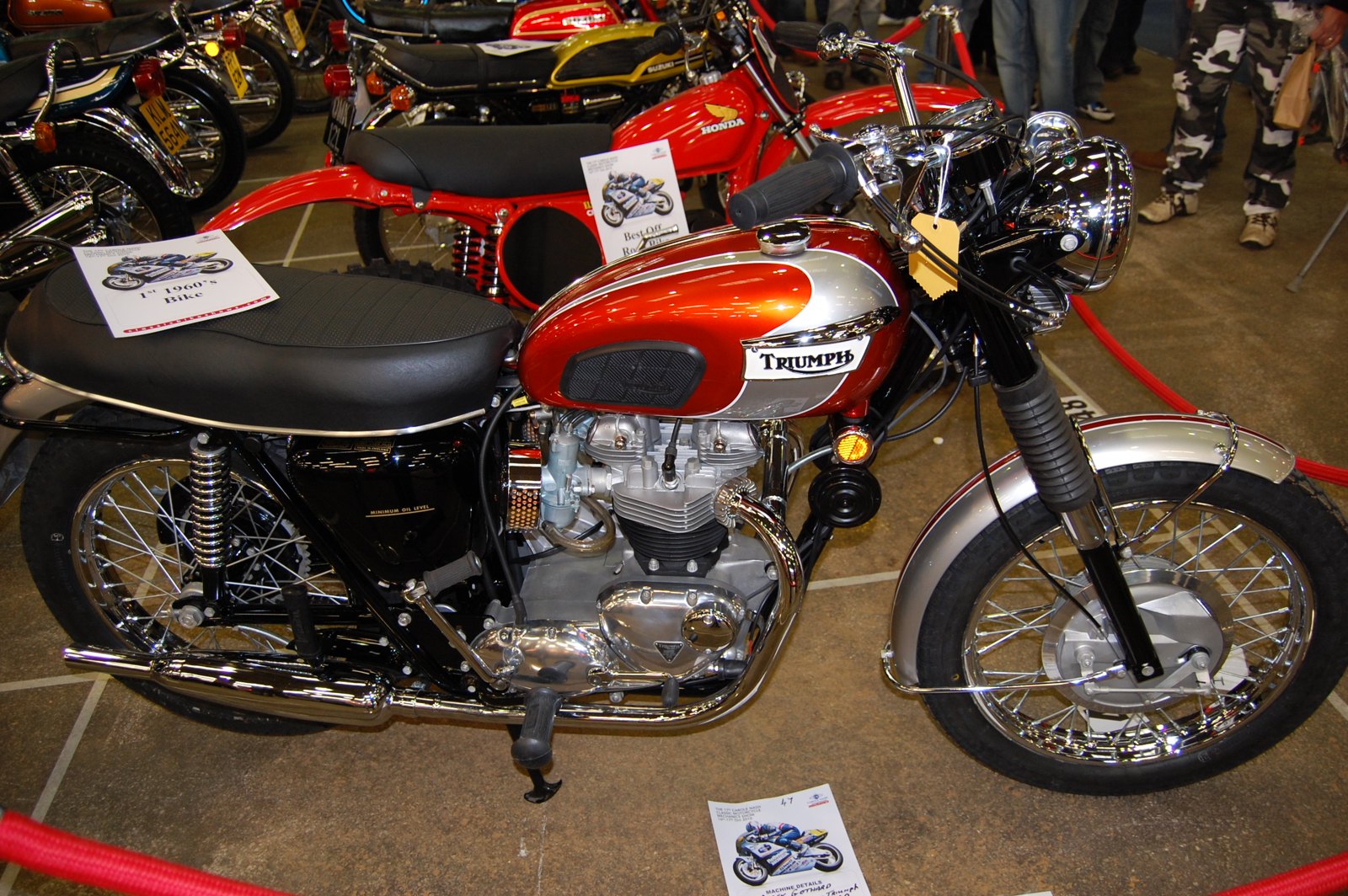
The Triumph Bonneville T120, launched in 1959, is the clearest example of what British engineering could do at its best: a 649cc air-cooled OHV parallel-twin making 46 bhp at 6,500 rpm and capable of 108 mph, built through to 1975 and still regarded as one of the finest sports motorcycles of its era.
Triumph's grip on that market was genuinely dominant. In 1969 the company held close to half the US superbike market. By 1973 that share was 9 percent. Nothing in Washington caused it. There was no tariff, no quota, no import restriction of any kind on British motorcycles — the American market stayed wide open the entire time, which is precisely what makes the collapse so damning.
Nor did those riders decamp to Harley-Davidson. Harley was drowning in the same water. It had owned effectively the entire American market for machines over 1,000cc, and by the early 1980s it was down to less than 15 percent, rescued only when Reagan imposed a 45 percent tariff on imported heavyweight motorcycles in 1983 — a decade too late to matter to Birmingham. The customers went to Honda, Yamaha, Suzuki, and Kawasaki, and they went for reasons any American dealer at the time could have listed.
Price was the first. A 1969 Honda CB750 landed in US showrooms at around $1,295. A BSA Rocket 3 asked roughly $1,750 and gave you less for it: no electric start, a drum front brake, and a reputation for marking its parking spot.
Supply was the second. Triumph's American operation could never get the machines it had already sold. Pete Coleman, a veteran of the company's US arm, later reckoned there were seasons they could have moved 50,000 bikes and felt lucky to receive 20,000. Every unfilled order was a customer walking into a Honda dealership instead — and Honda, having spent the 1960s building the broadest dealer network in the country on the back of its "nicest people" campaign, had somewhere for them to walk. Triumph's own US distribution was meanwhile split between rival East and West Coast operations that spent as much energy on each other as on the competition.
Quality was the third, and it was entirely self-inflicted. By 1971 American dealers were complaining that new Triumphs leaked oil everywhere but out the headlights. That was the same year BSA launched thirteen new and revised models built around a new oil-bearing frame, and the launch came apart in the worst possible way: the Triumph engine wouldn't drop into the frame without removing the rocker boxes first, the seat sat too high for most American riders, parts shortages stalled the line, and almost no Bonnevilles reached US dealers for the April-to-June selling season that made the year. BSA's own history records a £3 million trading loss for 1971. The 1971 Bonneville is remembered as the model that nearly finished the company, and it did that damage in the one market Britain could not afford to lose.
Argentina's 1948 import quotas and tariffs had already shown what happened when a captive export market shut its doors; that loss is one factor commonly cited in Vincent's end in 1955. America never shut its doors. Britain was pushed out of the biggest, richest, most open motorcycle market on earth by competitors who simply built a better machine, in greater numbers, for less money.
Japanese disruption
The gap opened long before anyone in Birmingham would admit it existed. Honda passed BSA as the world's largest motorcycle manufacturer in 1959, and British management spent the decade that followed reassuring itself that the Japanese would stay in small-displacement commuter machines and leave the big sporting bikes alone. It was a comfortable assumption and it was wrong.
The real difference was on the factory floor. British firms built motorcycles in a craftsman style, largely by hand, on machine tools that in many cases predated the war — the Boston Consulting Group's 1975 post-mortem for the Department of Industry found roughly 60 percent of the equipment at Norton's Wolverhampton plant was more than twenty years old. Honda, meanwhile, kept refining its production methods, chasing tighter tolerances and lower unit costs at volume. BCG reduced the outcome to a single comparison: Honda's Suzuka factory turned out around 350 machines per worker per year. Wolverhampton managed 18.
The CB750 in 1969 was that difference made visible — fast, smooth, reliable, disc-braked, electric-started, and cheaper than the British triples it landed on top of, arriving just weeks after Triumph and BSA had unveiled their own answer. Within two years the productivity gap had become a solvency problem. Within four, BSA had stopped building motorcycles altogether.
The scale of it is clearest at the end. In 1974, Triumph and Norton together built around 20,000 motorcycles. Honda sold 2 million. BCG's verdict was that British firms had answered Japanese pressure by retreating up into the large-capacity segment and harvesting short-term profit from it, a strategy the report judged nearly always disastrous in the long run. By the time the CB750 reached American showrooms the fight was already decided; the 1970s were just the arithmetic catching up.
The collapse of BSA and Norton
The failure wasn't only about Japanese competition. Management complacency, outdated manufacturing techniques, and a real lack of investment left British factories unable to respond even when the threat became obvious. BSA diverted significant money into a failed Daimler car venture instead of reinvesting in motorcycles, a decision that looks, in hindsight, like a company misreading its own business entirely.
Labor trouble compounded the damage. The 1970s brought a series of strikes and union disputes, including a 1973 Triumph factory strike layered on top of the era's broader miners' strikes, all of which disrupted production and eroded buyer confidence at the worst possible moment.
The consolidation attempts came too late and solved nothing. AMC dissolved in 1966 and reformed as Norton-Villiers. In 1973, government intervention forced the creation of Norton Villiers Triumph (NVT), an attempt to save what remained of BSA, Norton, and Triumph under one roof. It didn't hold. NVT went into liquidation by 1978, and with it went the last large-scale remnant of the industry that had once supplied a quarter of the world's motorcycles.
Ariel had already gone in 1970, absorbed into BSA in 1944 and wound down two decades later. Velocette stopped production in 1971. Royal Enfield's UK operation closed in 1967. By the early 1970s, as one contemporary account put it, the British motorcycle industry had all but disappeared.
Triumph's Hinckley revival
Triumph's survival wasn't inevitable. The name and rights were bought by builder and businessman John Bloor in 1983, and it took nearly a decade of quiet investment before a new factory in the British Midlands began production in 1991, this time built around modern manufacturing rather than hand assembly.
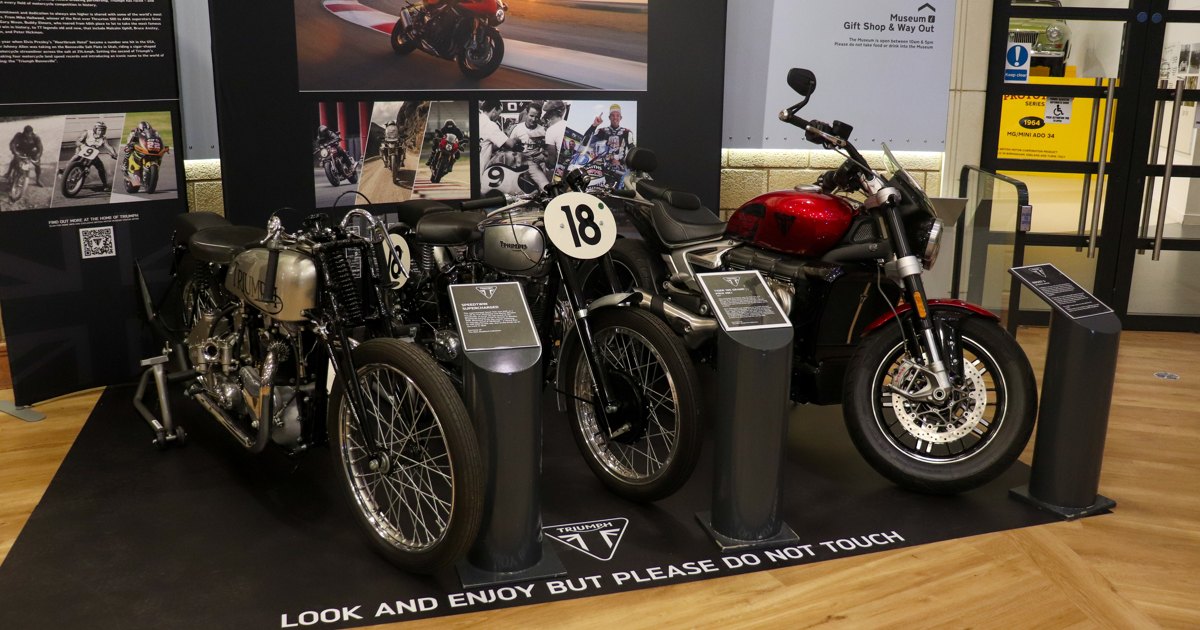
The real turning point came in 2001, when Triumph introduced its new Bonneville range and started a growth curve the company has followed ever since. Modern machines like the 2009 Thruxton and the 2017 Thruxton 1200 R trade on the same design language as the 1960s originals, but they're built the way Honda built bikes in 1969, not the way Triumph built them in 1969.
It's worth remembering that Royal Enfield never actually vanished at all. Production continued in India from the 1950s onward, uninterrupted, making it the only British-founded marque in continuous production since 1901. Today Royal Enfield sells around 1.18 million motorcycles a year, more than Harley-Davidson, KTM, BMW, Triumph, and Ducati combined, a fact that would have seemed absurd to anyone watching the industry collapse in 1975.
The collector market today
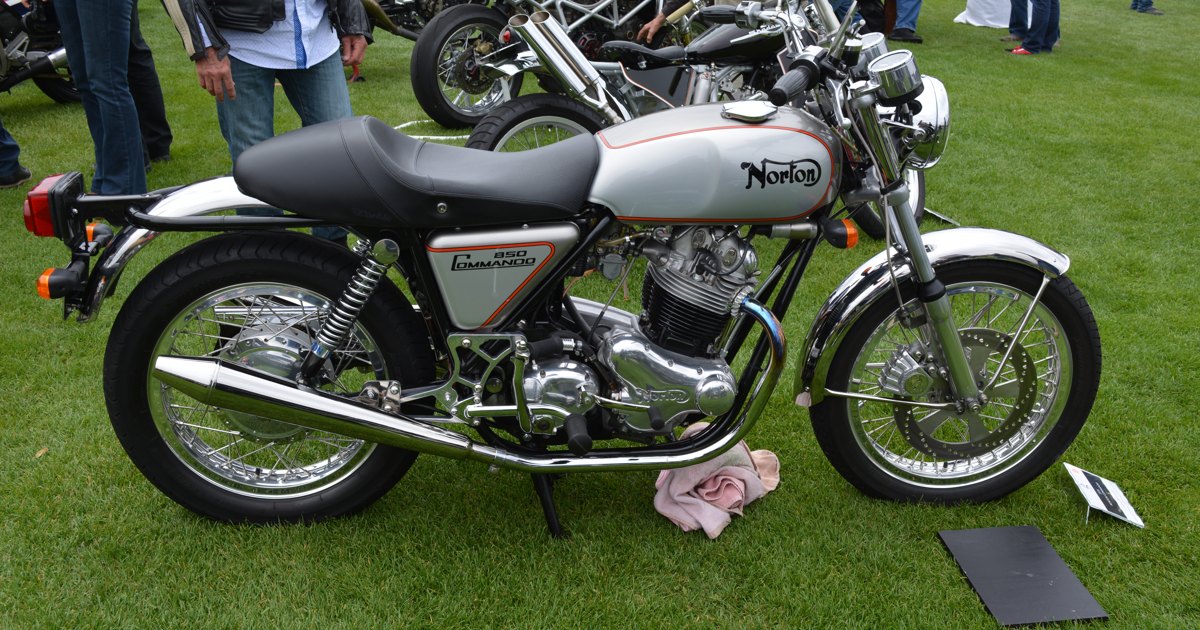
Names that died on the factory floor now live on as revived brands with new owners and new supply chains. Norton has gone through a well-documented revival, and BSA has returned as a subsidiary of India's Classic Legends. Industry watchers generally see Royal Enfield, Norton, and BSA as the marques best positioned to follow Triumph's example and rebuild as world-class manufacturers, though none has yet matched Hinckley's run.
For collectors, that means the story isn't finished. Original Bonneville T120s, Gold Star singles, and surviving Vincent twins remain the backbone of the classic British market, and values reflect both scarcity and the genuine engineering these bikes represented at their best. If you want a deeper technical look at one of the survivors of this era, our piece on the 1969 BSA Lightning is a good place to start.
The lesson from the 1970s collapse still shapes how buyers approach these machines: a beautifully engineered motorcycle from a company that stopped investing in its own future is still a risk, whether that was true in 1972 or is true of a modern revival brand today. Explore Triumph, BSA and Norton model histories and values on RunMotoRun before you buy.
Image credits: Ronald Saunders from Warrington, UK, CC BY-SA 2.0, via Wikimedia Commons