One number tells you almost nothing
A 1929 Brough Superior SS100 can sell for £184,000 one season and a broadly similar example can clear £300,000 the next. Both results are real, both appeared in a saleroom, and neither one alone tells you what the next SS100 is worth. That's the trap new bidders fall into: they find a single headline price and treat it as the market.
Auction houses publish results because results sell tickets to the next sale. That's fine, it's how the business works, but it means the number that gets repeated in a forum thread or a dealer's asking price is usually the biggest, not the most typical. A £241,500 works-history SS100 and a 1937 Vincent-HRD Series-A Rapide at £181,700 are both genuine sales, but they're the ceiling of their respective markets, not the floor or the middle.
Before you set a limit on anything, you need the spread, not the spike. That's a different skill than reading a classified ad, and it's the one this piece is about.
Reading the spread, not the spike
Pull every result you can find for a model, not just the one that made headlines. Line them up by date and you'll usually see two very different stories depending on which end of the market you're in.
At the blue-chip end, rare pre-war V-twins and fours have largely held their value or climbed. Ultra-rare machines with racing history or celebrity provenance, like the ex-Steve McQueen 1938 Triumph 5T Speed Twin at $175,500, sit in a market of their own where scarcity does the pricing.
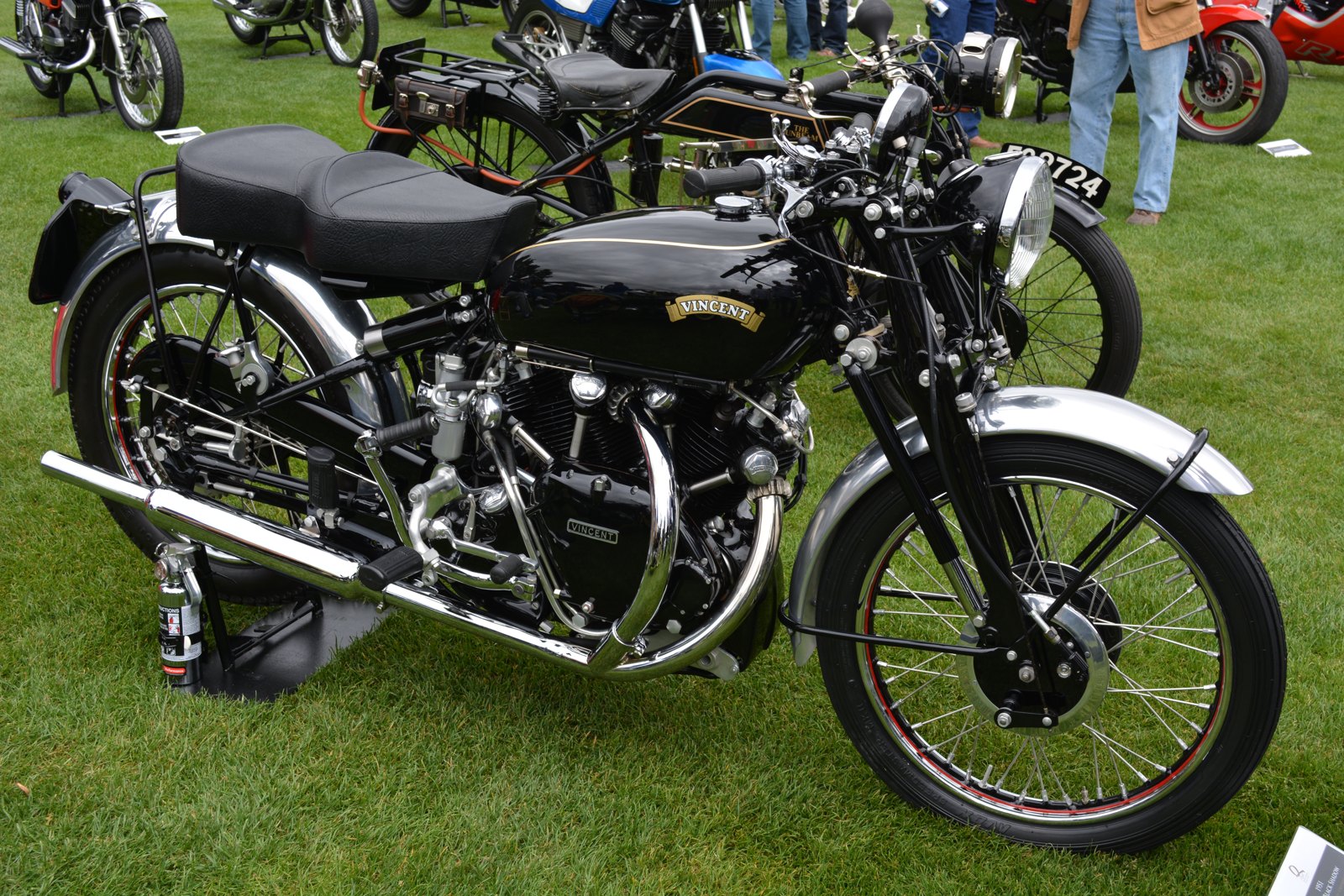
Mass-production British twins tell the opposite story. Ordinary BSAs, Triumphs, Nortons and Ariels, the bikes that were built by the thousand rather than the dozen, have corrected hard, with many models down 50 percent or more over the past decade. A Vincent Black Shadow that reliably made $180,000 a few years back now more typically trades nearer $80,000. Neither direction is a scandal. It's just what happens when a market has enough data points to find its real level.
This is exactly the exercise RunMotoRun's own model valuation pages and marque histories are built to support: not one quoted figure, but the pattern across many sales for a given Triumph, BSA, Moto Guzzi, or Ducati.
The signal hiding in no-sales and relistings
A bike that sold is only half the picture. A bike that failed to sell, or that keeps reappearing under different catalogue numbers, is telling you something too, and most bidders never look.
A no-sale (bought in against reserve, or passed with no bid reaching the floor) usually means the seller's expectation and the room's appetite didn't meet. Sometimes that's a one-off, an unlucky day, bad weather keeping bidders home. But when the same bike, or the same model at the same estimate, shows up unsold more than once, that's a market telling you the asking price is out of step with reality, not a quirk of one auction.
Relistings are worth tracking for a different reason: they often arrive at a lower estimate the second or third time around, which gives you a rough map of where the seller (or the house advising them) now thinks the real ceiling sits. A bike relisted twice with estimates dropping each time is closer to fair value than the original asking figure ever was.
Healthy markets show up in the aggregate numbers too. Bonhams' Spring Stafford Sale achieved a 96 percent sell-through rate at £3.2 million, and the house's overall average sits around 94 percent sold by lot and value. Sell-through rate at this level tells you estimates are being set realistically and buyers are showing up prepared to meet them. A sale with a run of no-sales in a given class of machine is the opposite signal: a cooling, or mispriced, segment.
Condition, mileage and originality as price modifiers
Two bikes of the same model and year can be worth wildly different amounts, and the gap almost always comes down to three things: condition, mileage, and how much of the machine is still original.
The trade uses a fairly consistent scale for this, rating condition from 1 (showroom or new) through to 6 (a poor, non-running, or incomplete parts bike). Knowing roughly where a machine sits on that scale before you bid stops you comparing a concours restoration against a barn find just because they share a model name.
A few things worth checking against any catalogue description or seller's claim:
Originality carries its own premium, sometimes a very large one. Rarity plus documented history can push a price well past what spec alone would predict, the kind of 400-percent-over-estimate result you see on genuinely limited-production machines when two determined collectors want the same bike. A matching-numbers engine and frame, factory paint, and original badging and instruments will usually out-value a nicer-looking bike that's had an engine swap or a repaint in the wrong colour.
Mileage matters less in isolation than what it implies. A low-mileage machine with patchy service history can be a bigger risk than a well-used one with a thick folder of invoices. Appraisers weigh up the cost to put a bike back to original spec as much as its present cosmetic condition, and so should you.
- Matching frame and engine numbers, checked against the model's known production run
- Original parts versus period-correct or later aftermarket substitutes
- Service history, invoices, and any restoration paperwork
- Known factory options or special-order features for that year
- Corrosion, electrics (Lucas or Bosch components original or replaced), and fasteners (Whitworth or BSF on most British twins) still to correct pattern
Building your own ceiling before the hammer
Everything above is in service of one number: the most you're willing to pay, decided before the auctioneer opens the bidding, not while your hand is in the air.
Start by gathering every result you can find for the model and the closest possible comparable years. Separate the no-sales and relistings out, note the estimates attached to each, and look at how often the model actually sells against how often it gets passed in. A model with a high sell-through rate and a tight spread of results is easier to price confidently than one with wide swings and frequent no-sales.
Then adjust for condition against that spread, honestly, not optimistically. If the mid-point result for a given model assumes a condition-2 bike and the one you're chasing is closer to condition-4 with non-original carbs and a repaint, your ceiling needs to come down from the average, not sit at it.
Set the number, write it down, and treat the room as background noise once bidding starts. Auction rooms are built to create urgency. Your homework is what keeps that urgency from setting your price for you.
Do the homework RunMotoRun exists for
A single auction result is a headline. A full spread of results, including the no-sales nobody talks about, is a valuation tool. The difference between the two is the difference between guessing and knowing what you're actually bidding on.
Before you set a limit on a Vincent, a Ducati 750 SS, or anything else on your shortlist, look up the model on RunMotoRun's valuation pages and work through its sale history the way you now know how. The number you arrive at yourself will serve you a lot better than the one someone else wants you to believe.
Image credits: CC0, via Wikimedia Commons; Daniel Hartwig from San Mateo, CA, USA, CC BY 2.0, via Wikimedia Commons