A Museum Piece You Can Ride
The Guggenheim has one. So does San Francisco's Museum of Modern Art. Both institutions chose to hang a Ducati 916 on their walls, not as motoring memorabilia but as a piece of design worth studying alongside sculpture and furniture. No British, Japanese, or American manufacturer has managed that.
That fact alone tells you something about Italian motorcycles. They are built to move fast, but they were drawn first, and the drawing matters as much as the engineering underneath it. Understanding why requires looking at three things that run through nearly every Italian marque: a design tradition, a racetrack, and a small number of people who refused to separate the two.
The Italian Design Tradition
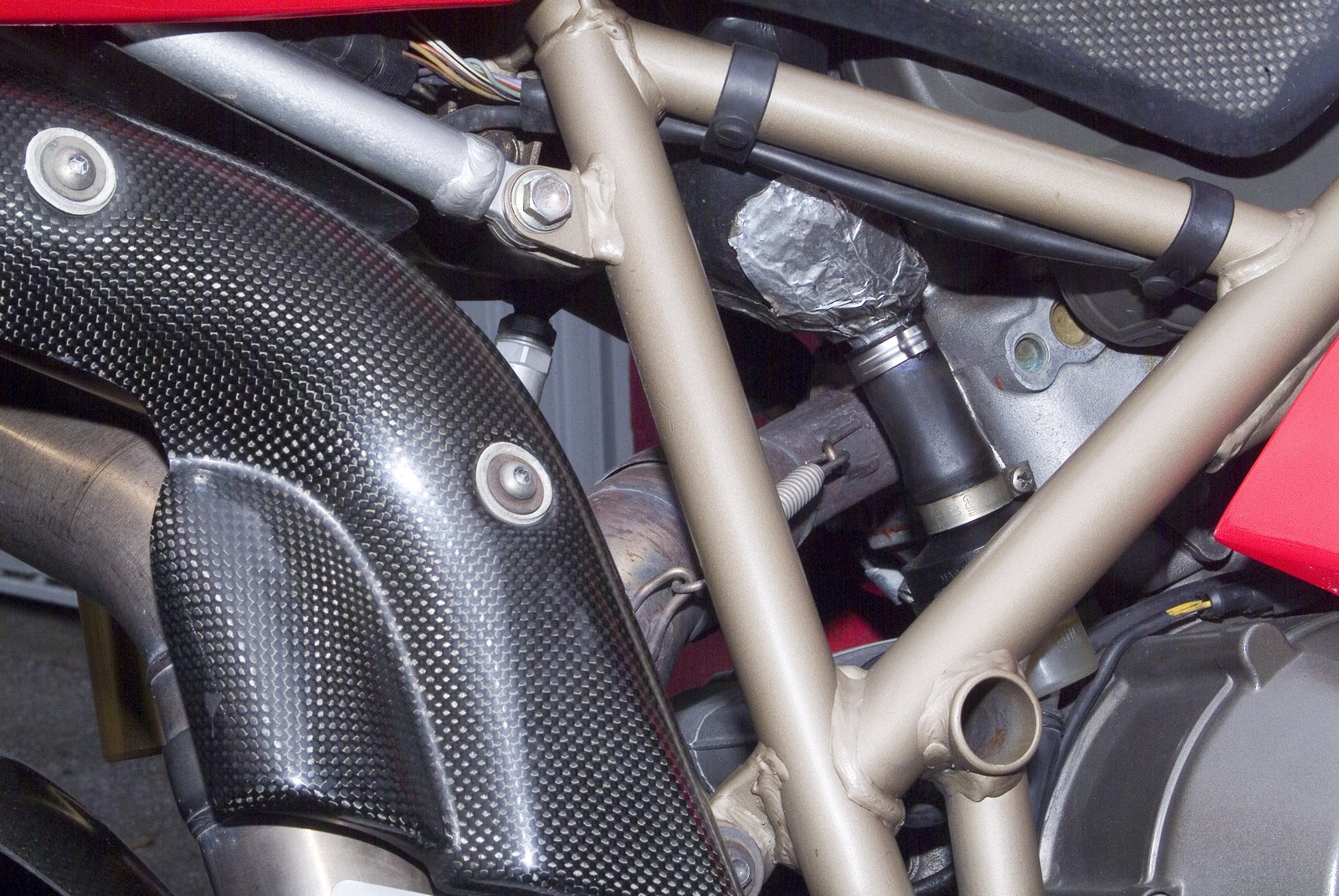
Italy's motorcycle industry didn't grow up in isolation from the country's wider design culture. The same instincts that shaped Italian cars, furniture, and fashion, an emphasis on line, proportion, and visual tension, found their way onto two wheels. A tank, a tail unit, a set of clip-ons aren't just functional parts; they're treated as surfaces worth resolving properly.
No one embodies this better than Massimo Tamburini (1943-2014), often called the best motorcycle designer of his generation. Tamburini co-founded Bimota before moving to Cagiva's research center in San Marino, where he penned the Ducati 916 and later the MV Agusta F4. His philosophy, reportedly, was that every part deserves to look considered, even the ones a rider will never see up close at speed.
That attitude shows up again in Miguel Ángel Galluzzi, the designer behind the original Ducati Monster and later work on the Aprilia Dorsoduro and Moto Guzzi V7 Racer. Galluzzi stripped a sportbike down to its frame, tank, and engine and proved that Italian design instinct works just as well in reverse, by taking things away rather than adding them.
Racing as R&D
Italian brands have never treated racing as marketing. It's closer to the actual engineering department. Grand Prix competition traces back to the early 1900s in Italy, and the Italian Grand Prix at Monza from 1949, and later Mugello from 1976, gave manufacturers a permanent proving ground a short drive from their factories.
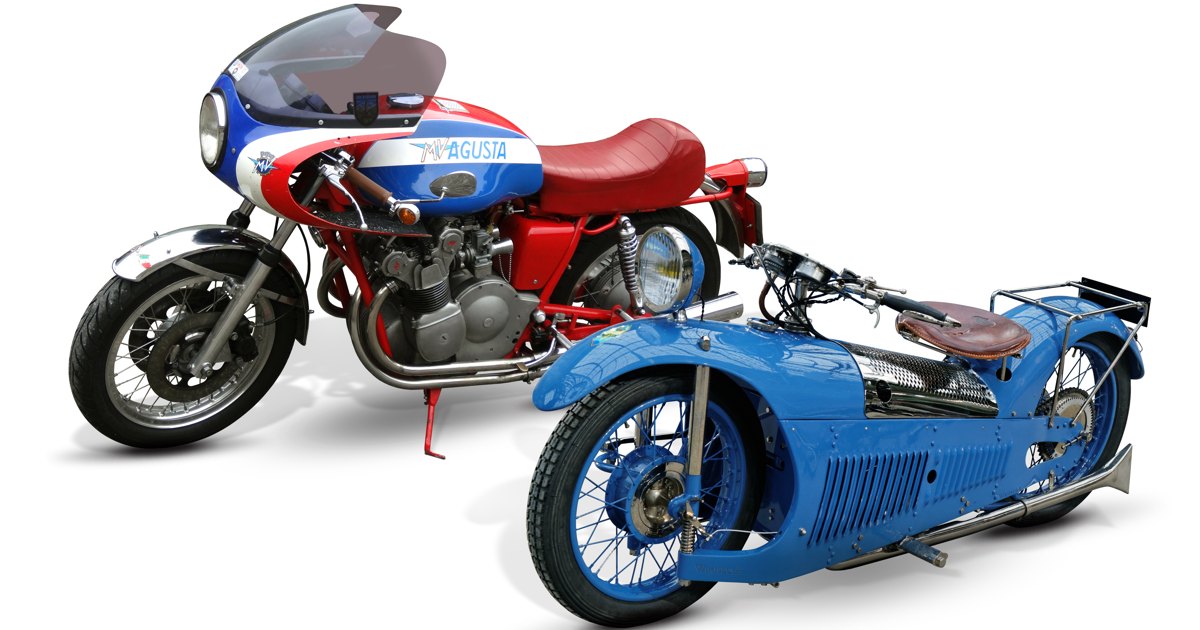
MV Agusta is the clearest case. The Varese firm, founded in 1945 out of the Agusta aviation business, dominated Grand Prix racing through the 1950s and 60s, a run that built both a technical case file and a reputation the road bikes still trade on. Giacomo Agostini's championship wins during that era are inseparable from MV Agusta's brand identity even today.
Ducati's desmodromic valve system and Aprilia's dominance in the 125cc and 250cc classes through the 1990s followed the same pattern: race first, then push what works down into production. The Ducati 916 itself won every Superbike World Championship constructors' title between 1994 and 2002, a run that cemented the road bike's reputation before most owners had even finished running in the engine.
The Key Marques
Five names carry most of the weight in this story, and each arrived at beauty by a different route.
Ducati, founded in Bologna in 1926 as a radio components maker before it ever built a motorcycle, built its identity on the L-twin desmodromic engine, the trellis frame, and a competition record that runs from the 750 SS to the 916 and beyond. Read the fuller Ducati history or the 25 facts about Ducati for the deeper timeline.
MV Agusta, founded in 1945, positions itself around the tagline 'Motorcycle Art,' and the description isn't just marketing copy. The F4, produced from 1999 to 2018 and designed by Tamburini, and the more recent Brutale 1000 RR (unveiled at EICMA 2018, producing over 200 hp from a 998cc inline-four with titanium valves and connecting rods) both carry the same handbuilt, exclusive positioning the brand has held since its Grand Prix years. Full story at MV Agusta history.
Moto Guzzi, the oldest of the group at founded in 1921 in Mandello del Lario, built its identity on the transverse V-twin rather than racing spectacle, an engineering signature that has barely changed in a century of production. See 25 facts about Moto Guzzi and the Moto Guzzi history page.
Bimota, based in Rimini, took a different route entirely: rather than building engines, the firm built frames and chassis around other manufacturers' powerplants, chasing handling and lightness above all else. It's also where Tamburini started before Cagiva and MV Agusta. More at Bimota history.
Aprilia, the youngest of the group in racing terms, built its reputation in the 1990s by dominating the 125cc and 250cc Grand Prix classes, a technical pedigree it later carried into road bikes like the Dorsoduro. Details at Aprilia history.
Why They Command a Premium at Auction
Italian bikes sell for more than their spec sheets alone would suggest, and the reasons are fairly consistent across brands. Limited production runs, a documented racing pedigree, and design work attributable to a named individual (Tamburini, Galluzzi) all give buyers something concrete to point to beyond nostalgia.
The Ducati 916 is the clearest example: a bike collected by art museums, raced to multiple world titles, and produced in numbers small enough that clean examples have become genuinely scarce. That combination of racing record and design credibility is exactly what auction houses look for when pricing a lot.
It's worth being honest that not every Italian marque holds value equally well. Some research on resale trends suggests Ducati has historically retained value more consistently than MV Agusta, which has seen sharper depreciation on certain models. The lesson for a buyer isn't that all Italian bikes are blue-chip by default, it's that provenance, condition, and specific model history matter as much as the badge on the tank.
Buying an Italian Classic Today
Buying into this heritage takes more discipline than buying a Japanese classic from the same era. Parts networks are thinner, specialist knowledge is more concentrated, and cosmetic condition affects value more heavily because so much of the appeal is visual in the first place.
A short checklist before you commit:
- Verify matching frame and engine numbers, especially on desirable models like the 916 or early MV Agusta F4, where forged provenance is a known risk.
- Budget for specialist servicing. Desmodromic valve systems and hand-finished components cost more to maintain than a mass-market equivalent.
- Check for rust and electrical faults on anything stored outdoors or in humid climates; Italian electrics from the 1970s and 80s have a mixed reputation.
- Confirm original bodywork where possible. Replacement panels rarely match factory paint and line quality, and this hits resale value hard on design-led models.
- Research the specific model's auction history rather than assuming brand reputation alone will hold its value.
The Draw That Doesn't Fade
What keeps Italian motorcycles at the center of the collector market isn't a single factory or a single designer. It's the fact that racing success, design ambition, and manufacturing pride have stayed tangled together in Italy for a century, from Moto Guzzi's first V-twins in 1921 through Tamburini's work on the 916 and F4 to Aprilia's Grand Prix dominance in the 1990s.
That's a harder thing to fake than a paint scheme, and it's why these bikes keep showing up not just in garages but in museums.
Browse RunMotoRun's Italian brand pages and current auction valuations to see where these bikes stand in today's market before you start looking for one to buy.
Image credits: Public domain, via Wikimedia Commons; ScuderiaAssindia, CC BY-SA 3.0, via Wikimedia Commons