
There's a moment you can point to as the day Ducati became Ducati.
It was April 23, 1972. The Imola 200, run on the demanding road circuit in northern Italy, was supposed to be Italy's answer to Daytona — a Formula 750 race for proper, large-displacement four-strokes that could showcase European engineering against the rising Japanese tide. Honda had brought their CB750 racers. MV Agusta was there with the bikes that had carried Giacomo Agostini to championship after championship. The grid was thick with the era's best — Phil Read, Walter Villa, Bruno Spaggiari, Renzo Pasolini.
Ducati turned up with a 750 V-twin that almost nobody outside Borgo Panigale thought they had any business being there. It had been designed by Fabio Taglioni, a man who had been quietly building Ducati's racing identity for nearly two decades, and who had bet the company's future on a 90-degree L-twin configuration that the rest of the industry considered an oddity.
Paul Smart, a British rider who had agreed to ride only because his wife answered the phone when Ducati called, won. Bruno Spaggiari finished second, also on a Ducati. The two factory bikes crossed the line together — first and second — in front of an Italian crowd that suddenly understood what had just happened.
That race didn't just put Ducati on the world map. It defined what the company was going to be for the next half-century. Stubborn engineering choices, defended against the conventional wisdom, occasionally producing results that made the conventional wisdom look stupid.
The full story starts much earlier than 1972, though. It starts with three brothers, their engineer father, a radio component factory, and an Allied bombing raid that nearly ended everything before motorcycles were even part of the picture.
The Radio Shop in Bologna (1926–1944)
On July 4, 1926, three brothers — Adriano, Bruno, and Marcello Cavalieri Ducati, working with their father Antonio — founded a company in Bologna called Società Scientifica Radio Brevetti Ducati. The name is a mouthful even in Italian. Translated, it's roughly "Ducati Patented Radio Scientific Society," which gives you a fairly clear idea of what they were actually doing.
They weren't building motorcycles. They were building radio components.
Adriano was the technical mind of the operation. In 1924 — two years before the company was even formally founded — he'd built a short-wave device capable of establishing radio communication between Italy and the United States. A genuine engineering achievement, at a time when transatlantic radio was a recent and difficult thing. That work brought him into the orbit of Guglielmo Marconi himself, who visited the Ducati headquarters in 1934 during the First Italian Radio-technicians Conference and signed a photograph that the family kept. Bruno managed the project and the site. Marcello ran personnel.
The business grew quickly. By the 1930s, Ducati was producing radios, condensers, vacuum tubes, electric razors, cameras, jukeboxes, refrigerators, and intercoms — a remarkably broad consumer electronics portfolio for an Italian firm of the period. Workforce numbers vary across sources, but Ducati was undeniably one of the largest employers in Bologna, with thousands of workers by the start of World War II. In 1935, the company built a new dedicated factory in the Borgo Panigale district of Bologna, the site that remains Ducati's headquarters today.
What's less commonly mentioned in the official histories is what the factory was making during the war. Once Italy entered World War II, the Borgo Panigale plant was producing precision optical equipment for the German and Italian militaries — most notably the Bimar (binocolo marino) binoculars used by the German navy in the Battle of the Atlantic. The Bimars were genuinely excellent. They gave the Kriegsmarine a real optical advantage in naval engagements, which is why the Allies eventually decided that Ducati's factory had to be eliminated.
On October 12, 1944, around 700 American B-17 Flying Fortresses and B-24 Liberators flew over Bologna and dropped 1,300 tons of bombs on the city. Roughly 40 of those Liberators were specifically targeted at the Borgo Panigale factory. The mission was codenamed Operation Pancake. By the time the bombers had returned to base, Ducati was rubble.
Italian industry in 1944 was caught between collapsing fascist control, an Allied advance moving up the peninsula, and the practical impossibility of running a precision manufacturing operation under bombardment. Production at Ducati effectively stopped. The Ducati family had built something significant over eighteen years, and now they had to figure out what came next.
The Cucciolo and the Postwar Pivot (1944–1948)
What came next was, almost by accident, motorcycles.
In 1944, with much of Italian industry destroyed or paralyzed, a small Turin-based company called SIATA (Società Italiana Auto Trasformazione Accessori) had developed a tiny 48cc auxiliary engine called the Cucciolo — Italian for "puppy" — designed to bolt onto a bicycle and turn it into something approximating motorized transport. Postwar Italy needed cheap mobility desperately. Cars were unaffordable. Public transport was wrecked. A bicycle with an engine was, for many people, the difference between getting to work and not.
The Cucciolo sold well. So well, in fact, that SIATA couldn't keep up with demand.
Ducati — with its damaged factory, idle workforce, and precision manufacturing capability — purchased the manufacturing rights in 1946. The fit was, in retrospect, remarkable. SIATA had a product. Ducati had the industrial base to actually build it at scale. By 1950, Ducati had sold over 200,000 Cucciolo engines.
Two things are worth noting about this period. The first is that the Cucciolo wasn't really a Ducati design — it was a SIATA design that Ducati put into mass production. The second is that selling 200,000 of anything in postwar Italy was a genuinely impressive commercial achievement, but it didn't fix the company's underlying financial problems. The bombing damage couldn't be repaired with cash flow alone. By 1948, the situation had become untenable.
The Italian government nationalized Ducati in 1948.
This is one of those moments in the company's history that gets glossed over in the official telling. Nationalization wasn't a triumph; it was a rescue. Ducati was a strategic asset — too large an employer in Bologna to allow to fail outright — and the Italian state stepped in to keep the lights on.
The Ducati 60 and the Real Beginning (1948–1953)
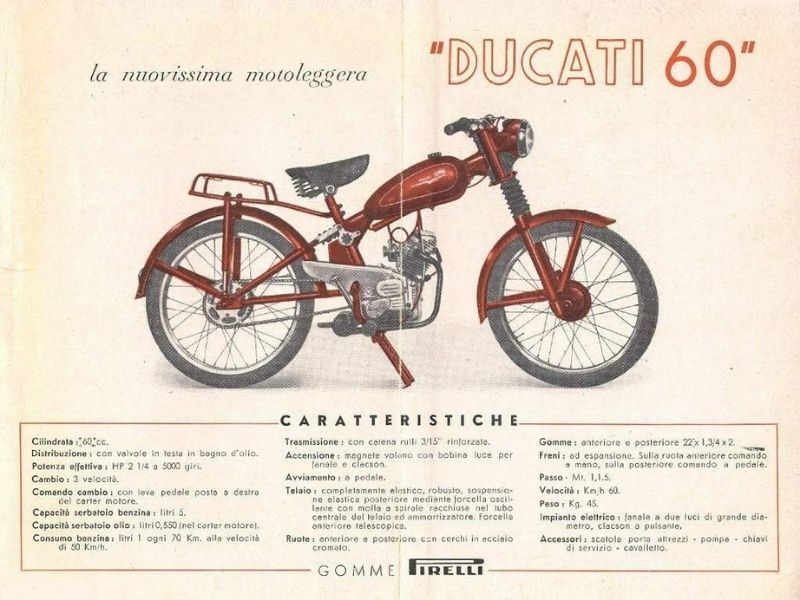
The Cucciolo gets called Ducati's first motorcycle in a lot of casual histories, but that's not quite right. The Cucciolo was an engine you bolted to a bicycle. The Ducati 60, introduced in 1949, was the company's first actual motorcycle — designed, engineered, and built as a complete machine.
It used an upgraded version of the Cucciolo engine, now bored out to 60cc, paired with a three-speed gearbox and aluminum covers protecting the rocker arms. The whole thing was light, easy to ride, and aimed deliberately at a broad audience — including women, who Ducati's marketing identified early as an underserved segment of the postwar transportation market.
The 60 was a commercial success, and it bought Ducati time. By 1953, the company was stable enough to undergo a structural reorganization that turned out to matter quite a lot. It was split into two separate entities: Ducati Meccanica SpA (the motorcycle and mechanical division) and Ducati Elettronica (the electronics division). The split allowed each business to focus on its own market, and it positioned the motorcycle side as a serious manufacturer rather than a sideline of an electronics firm. Government investment helped modernize the Borgo Panigale factory, which came under the leadership of Dr. Giuseppe Montano.
Montano made one decision in 1954 that, more than anything else, defined what Ducati would become.
He hired Fabio Taglioni.
Fabio Taglioni and the Engineering Soul of Ducati (1954–1989)
If you want to understand Ducati, you have to understand Taglioni.
He was born in 1920 in Lugo, in the Emilia-Romagna region — the same general part of northern Italy that produced Enzo Ferrari, Ferruccio Lamborghini, and most of the rest of the country's motorsport heritage. He'd trained as a mechanical engineer, taught engineering for several years, and joined Ducati at 34 with very specific ideas about what motorcycles ought to be.
His first project was the 100 Gran Sport, a small-displacement racing bike that became known as the Marianna — a single-cylinder design that immediately started winning long-distance races in the popular Motogiro d'Italia and Milano-Taranto events. The Marianna was Taglioni's calling card. It established him at Ducati, and it established Ducati as a manufacturer that could compete on technical merit rather than just affordable mass-market transport.
But the Marianna isn't what made Taglioni famous. What made him famous was something genuinely strange that he'd been thinking about for years: desmodromic valve actuation.
The Desmodromic Obsession
Most internal combustion engines use spring-loaded valves. The camshaft pushes the valve open against the pressure of a spring; when the camshaft lobe rotates past, the spring pushes the valve closed again. This works fine at moderate engine speeds. At very high RPM, though, springs become a problem. The valve can "float" — fail to close in time before the next combustion event — because the spring just isn't fast enough to keep up.
The desmodromic system replaces the spring with a second cam lobe that mechanically forces the valve closed. No spring. No floating. The valve closes exactly when the engineering says it should, regardless of how fast the engine is spinning.
The concept wasn't original to Taglioni — Mercedes-Benz had used it on their W196 Formula 1 car in the mid-1950s, and various other engineers had experimented with it over the years. But Mercedes had given it up because of the complexity. Desmodromic systems are hard to manufacture. They require extremely precise tolerances. They cost more, take longer to build, and need more skilled labor to assemble than conventional valve trains. Most manufacturers looked at the trade-off and said no.
Taglioni looked at the trade-off and said yes.
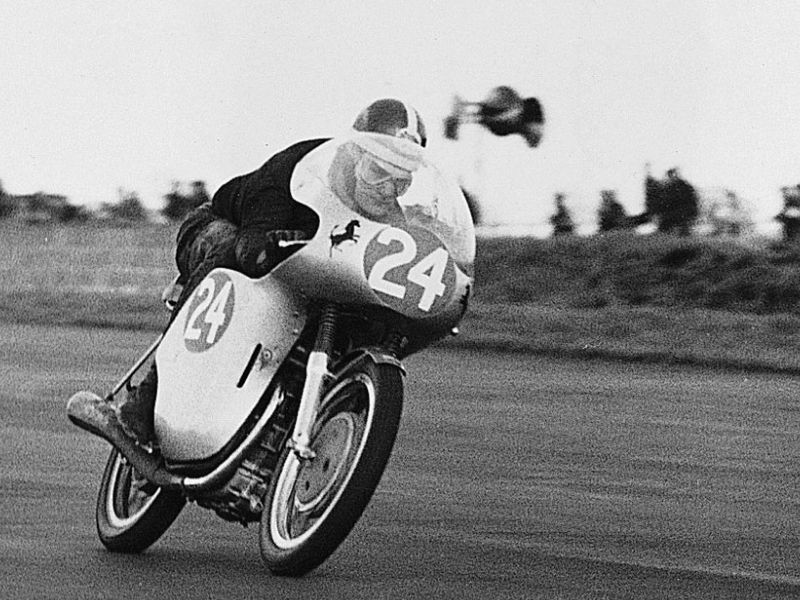
He developed his first desmodromic system for Ducati in the late 1950s. The 125 GP machines he built using it were genuine race winners — capable of revving harder and producing more power than anything Ducati had built before. He kept refining the system through the 1960s, and by the time he'd finished, desmodromic valve actuation had become Ducati's fundamental engineering signature.
It's still there today. Every Ducati road bike of any significance has a desmo valve train. Other manufacturers experimented and gave up. Ducati committed and never stopped. There's an argument that this commitment is fundamentally inefficient — that modern materials and engineering have made conventional valve springs perfectly adequate for road bikes, and that the cost premium of desmo isn't justified by performance. The counter-argument is that the commitment itself is the point. Ducati makes desmo motorcycles because Ducati makes desmo motorcycles. It's an expression of identity, not just a technical solution.
You can read the full story of how it works and why it persists in our deep dive on the desmodromic valve system , but for our purposes here, just know that this was the technical foundation of everything that followed.
The Round-the-World Trip (1957–1958)
Before we get to the racing dominance, here's a story that almost no other manufacturer has anything quite like.
In 1957, two Ducati employees — Leopoldo Tartarini and Giorgio Monetti — set off from Bologna on two stock 175 T motorcycles to ride around the world. Not as a corporate publicity stunt with backup vehicles and support crews, exactly, but as a serious attempt to demonstrate that Ducati's small-displacement bikes could handle global travel.
They covered five continents. They rode through four political revolutions in places that were less stable than they'd anticipated when they planned the route. They came back to Italy in 1958, having put approximately 60,000 kilometers on their bikes and proven that whatever Ducati was building was genuinely durable.
The publicity value was enormous, particularly in markets — like the United States — where Ducati was a complete unknown. Tartarini, incidentally, would go on to found Italjet, but that's a different article.
Singles, Glory, and Government Trouble (1960–1972)
Through the 1960s, Ducati's racing program — built around Taglioni's single-cylinder desmo engines — racked up wins at every level it competed. The 250cc and 350cc bikes were genuinely competitive against the dominant Japanese manufacturers. Mike Hailwood rode Ducati singles to multiple victories. The Mach 1, a 250cc road bike introduced in 1964, was for a period the fastest production 250 in the world — a remarkable claim for an Italian single-cylinder against the increasingly sophisticated Japanese parallel twins. The bikes were small, light, and ferocious for their displacement.
But the company itself was a mess.
Ducati was still effectively a state-owned enterprise, run by a series of government-appointed managers whose priorities didn't always align with what the engineering and racing departments wanted. There were periods of investment and periods of neglect. Production targets shifted. Models came and went. The 1960s were, commercially, a period when Ducati struggled to translate its technical achievements into a coherent product strategy.
By the late 1960s, two things had become clear. First, the small-displacement single-cylinder bikes that had defined Ducati's racing identity were no longer enough. The market wanted larger, more powerful machines. Second, the Japanese manufacturers — particularly Honda, with its CB750 — had transformed what was commercially possible. A 750cc four-cylinder superbike was the new benchmark, and nobody in Italy had a credible answer.
Taglioni's answer was the L-twin.
The 750 GT and the L-Twin Bet
A 90-degree V-twin, mounted with the front cylinder almost horizontal and the rear cylinder pointing nearly straight up, isn't a configuration you'd choose for convenience. The bike is long. The packaging is awkward. The rear cylinder runs hot from being tucked up against the frame and the rider. There are good reasons why most manufacturers preferred either parallel twins or proper V-fours and inline-fours.
But the 90-degree configuration has one fundamental advantage: perfect primary balance. With cylinders separated by 90 degrees and crankshaft throws set up correctly, the engine doesn't shake. No counterbalancers needed. No vibration to design around. For a sport motorcycle that's going to be ridden hard, that matters enormously.
Taglioni built his first prototype 750 in 1970 and called it, naturally, an L-twin (because the cylinder arrangement looks like the letter L when you view it from the right side). The 750 GT went into production in 1971 — Ducati's first proper big-bore road bike, the answer to the Japanese inline-fours.
The 750 Sport followed in 1972 — sportier ergonomics, more aggressive tuning, much more aggressive looks. And then came Imola.
Imola 1972: The Race That Defined Everything
The 200 Miles of Imola — sometimes called the Imola 200 — was scheduled for April 1972. It was a Formula 750 event, run on the road circuit at Imola, and was being positioned as Italy's answer to the Daytona 200. The world's best riders showed up. So did the world's best 750cc racing motorcycles.
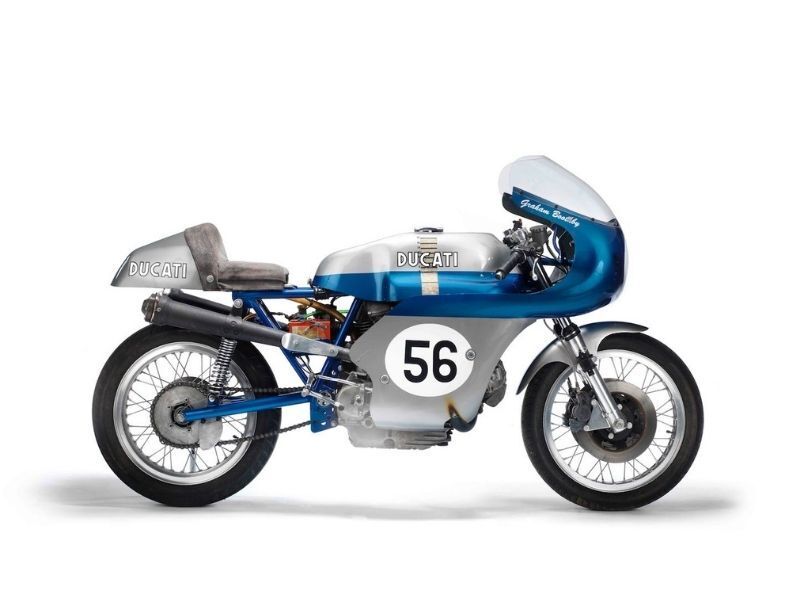
Ducati entered three 750 racers, prepared specifically for the event by Taglioni's department. The bikes were essentially developed 750 SS prototypes — the desmodromic valve gear from the racing singles, fitted to the L-twin road platform, with bodywork purpose-built for the event.
Bruno Spaggiari was meant to be Ducati's lead rider. The second seat went to Paul Smart, a British rider whose participation came about almost by accident. The story, which Smart told in interviews for years afterward, was that Ducati called the house, and his wife — Maggie Smart — answered, and committed Paul to the ride before he had the chance to think about it.
Smart won. Spaggiari finished second. Ducati had done what almost no observer had thought possible: beaten the Japanese factory teams in a high-profile international event with a V-twin design that the rest of the industry had largely dismissed.
Imola 1972 mattered for two reasons. The first was commercial — it transformed Ducati from a struggling Italian manufacturer with technical credibility but uncertain commercial prospects into a brand with international cachet. The second was philosophical. It validated, in the most public possible way, the engineering choices that Taglioni had been making for almost twenty years. The L-twin worked. Desmodromic valves worked. The whole approach of building motorcycles around technical conviction rather than market consensus worked.
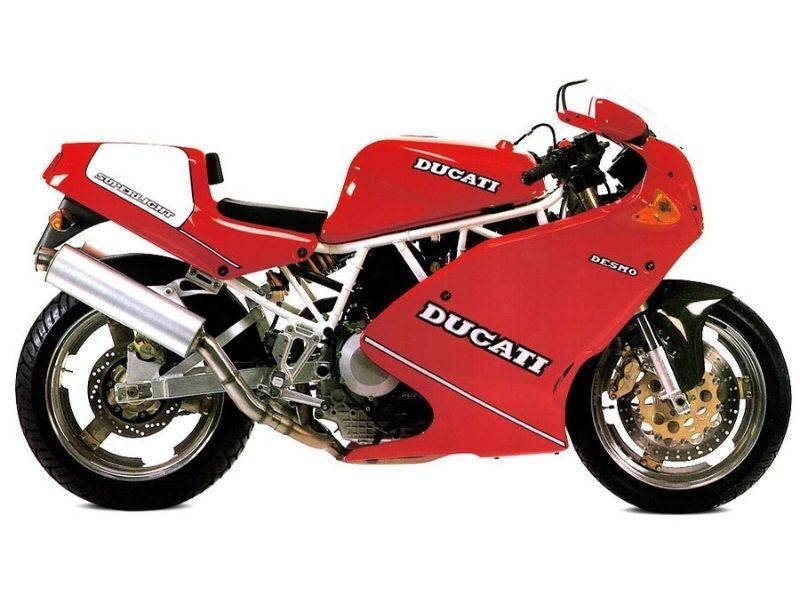
Ducati immediately turned the race-winning configuration into a production motorcycle. The 750 SS — sometimes called the "Imola Replica" — went on sale in 1973. It's now considered one of the most significant motorcycles of the 20th century, and one of the most valuable to collectors of any era.
The 900 SS and the Hailwood Comeback (1973–1979)
The 1970s rolled on with Ducati pushing the L-twin platform in different directions. The 750 SS led to the 900 SS — a larger, more refined version aimed at the developing supersport market. By 1978, the 900 SS was Ducati's flagship and one of the most respected sport bikes in the world.
That's the year Mike Hailwood came back.
Hailwood had been one of the dominant motorcycle racers of the 1960s — nine world championships, a riding style that some observers considered the most fluent in the sport's history. He retired from motorcycle racing in 1968 to focus on Formula 1, then suffered a serious crash at the Nürburgring in 1974 that ended his car racing career. By the late 1970s, he was 38 years old, hadn't raced motorcycles in over a decade, and had every reason to leave well enough alone.
Instead, he agreed to ride a privately-prepared Ducati 900 SS in the Isle of Man Formula 1 TT in 1978.
The Isle of Man TT is brutal. It's run on public roads — narrow, walled, lined with hedges and stone houses — for 37.7 miles per lap, on a course that punishes the slightest mistake more severely than any other circuit in the world. To win it after eleven years away from motorcycle racing, on a privately-entered bike against factory-prepared opposition, would be difficult bordering on impossible.
Hailwood won.
The race is one of motorsport's enduring legends, and the bike — the Hailwood Replica 900 SS — became one of Ducati's most iconic models. Hailwood himself died in a road traffic accident in 1981, but the win remained a defining moment in Ducati's racing history and a reminder of how much rider talent could transform what a motorcycle was capable of.
The Cagiva Rescue (1979–1985)
By the late 1970s, Ducati was in trouble again.
The bikes were beautiful. The engineering was world-class. The racing achievements were genuine. None of it translated to consistent commercial success. Ducati had been moved into the Italian state-owned conglomerate VM Group during the 1970s, and the corporate structure was preventing the kind of focused investment that the motorcycle business needed to compete with the increasingly sophisticated Japanese manufacturers.
There were attempts to broaden the range. The Ducati Pantah — a smaller-displacement L-twin introduced in 1979 with a belt-driven cam (Taglioni's last great engineering innovation) — was an excellent bike that proved the desmo platform could scale down as well as up. But it didn't reverse the trend. By the early 1980s, Ducati was producing fewer motorcycles each year, and the future looked uncertain.
In 1985, the Castiglioni brothers — Claudio and Gianfranco — bought the company.
The Castiglionis were the owners of Cagiva, an Italian motorcycle manufacturer based in Varese that had grown rapidly through the 1970s by acquiring distressed competitors. They'd previously bought MV Agusta, Husqvarna, and other heritage brands. Cagiva's purchase of Ducati was, on paper, just another acquisition. In practice, it would prove to be one of the most consequential ownership changes in motorcycle history.
The Castiglionis brought commercial discipline, marketing instinct, and — crucially — a willingness to invest in the kind of new product development that had been absent under state ownership. The first major fruit of that investment was an engine that would change Ducati permanently.
The 851 and the Birth of Modern Ducati (1987–1993)
In 1987, Ducati launched the 851. It was, in retrospect, the moment when Ducati transitioned from a heritage brand making variations on Taglioni's L-twin singles to a genuinely modern motorcycle manufacturer.
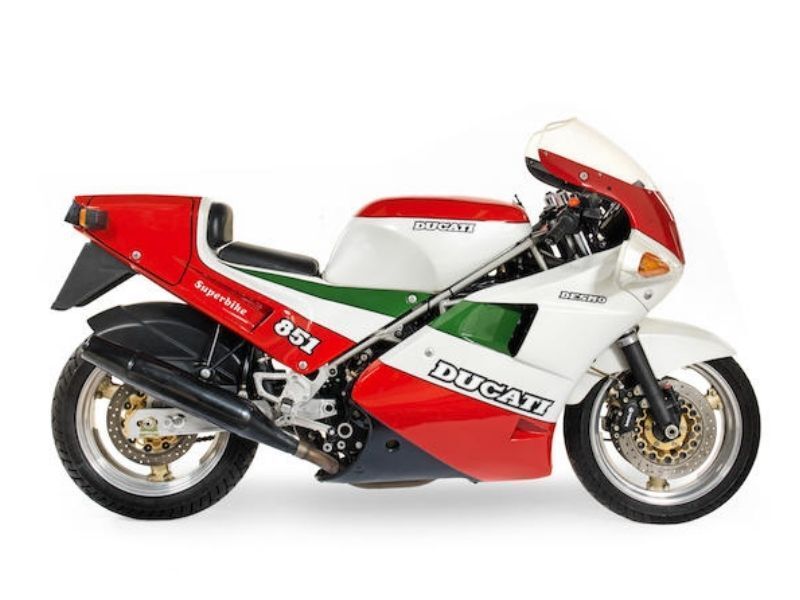
The 851 used a new engine design — water-cooled, four-valve-per-cylinder, fuel-injected. It still followed the L-twin layout, still used desmodromic valves, but everything else was new. The cooling system allowed for higher power outputs. The four-valve heads improved breathing. Fuel injection (rather than carburetors) gave more precise control across the rev range. The bike was designed by Massimo Bordi, and it represented the work of an engineering team that was finally being given the resources to think seriously about what a Ducati ought to be in the 1990s rather than just refining what it had been in the 1970s.
The 851 Tricolore was the first iteration — produced in limited numbers, painted in the red, white, and green of the Italian flag. The displacement quickly grew to 888cc as the bike evolved. The whole platform became Ducati's racing machine in the new World Superbike Championship, which had been founded in 1988 and was rapidly becoming the most prestigious series for production-derived motorcycles.
Raymond Roche won Ducati's first World Superbike championship in 1990 on a developed 851. Doug Polen won in 1991 and 1992. Carl Fogarty's domination — four titles in five years between 1994 and 1999 — was just beginning. Ducati was about to spend the next decade as the dominant force in production-derived motorcycle racing.
But the 851 wasn't the bike that defined the era for the public. That was the 916.
The 916: Tamburini's Statement (1994)
Massimo Tamburini was an industrial designer who co-founded Bimota — a small Italian boutique manufacturer — before joining the Cagiva Group's design center. By the early 1990s, he was given responsibility for a project that would replace the 888 as Ducati's flagship superbike.
What he produced has been repeatedly described as the most beautiful motorcycle ever made. That's a subjective claim, but it's not an unreasonable one.
The Ducati 916 was launched in 1994. The bodywork was sculptural — flowing lines, a distinctive single-sided swingarm, an underseat exhaust that became the bike's most copied design feature. The headlight assembly used twin round projector lamps in a very specific way that became instantly recognizable. The whole machine looked like nothing else on the market, and it looked aggressive and elegant simultaneously, which is a difficult combination to pull off.
Underneath the bodywork was an evolved version of the 851/888 engine — now displacing 916cc, producing around 114 horsepower, capable of a top speed close to 300 km/h. The chassis was a steel trellis design that became another signature Ducati element. The bike was light. It handled well. It was, by every reasonable measure, a competitive sport motorcycle.
But what made the 916 historically significant wasn't its performance. It was the design. The 916 became, almost immediately, the bike that defined what a sport motorcycle was supposed to look like for the rest of the 1990s and into the 2000s. Other manufacturers spent years trying to match its visual impact. Some of them succeeded mechanically. Almost none of them succeeded aesthetically.
Carl Fogarty won World Superbike championships in 1994, 1995, 1998, and 1999 on 916-based machines. Troy Corser won in 1996. Anthony Gobert and others were on the podium constantly. Ducati's racing dominance in that era was, in significant part, a function of having simply built a better motorcycle.
Tamburini went on to design the MV Agusta F4 — another spectacular motorcycle — but the 916 remains his most consequential work.
The Monster: Saving Ducati's Commercial Future (1993)
While the 851/888/916 platform was building Ducati's racing legend, another bike was quietly saving the company commercially.
In the early 1990s, Cagiva was struggling. The group had overextended itself — too many brands, too much investment, not enough revenue from any of them. Ducati was one of the better-performing assets in the portfolio, but it was dependent on relatively expensive sport bikes that appealed to a narrow demographic. The company needed something that would sell in much larger volumes.
Miguel Angel Galluzzi, an Argentinian designer working at the Cagiva Group's design center, came up with the answer.
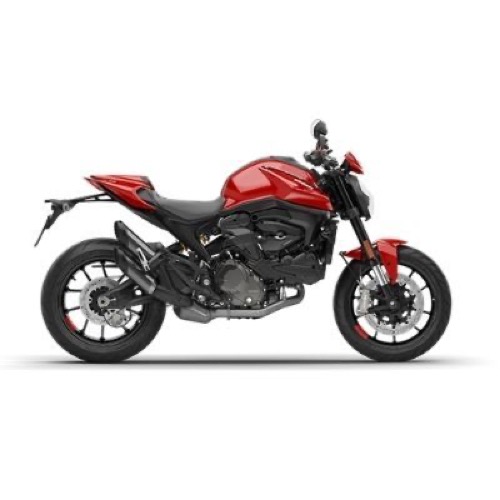
The Ducati Monster, launched in 1993, was deceptively simple. Take the engine and trellis frame from the existing 900 Supersport. Strip away the bodywork. Mount handlebars high. Add a small headlight, a teardrop fuel tank, and minimal ergonomic concessions. The result was a naked motorcycle that looked aggressive without being intimidating, was approachable without being boring, and was significantly cheaper to manufacture than a fully-faired sport bike.
It was a runaway success. The Monster created — or, more accurately, popularized — what came to be called the "naked bike" or "streetfighter" category. By the mid-2000s, the Monster line accounted for over 50% of Ducati's global sales. The bike that was supposed to be a side project became the commercial backbone of the company.
Galluzzi's design has been refined through dozens of variants — different displacements, different riding positions, different levels of aggression — but the core idea has remained essentially intact for over thirty years. It's one of the longest-running model platforms in motorcycle history, and arguably the single most important commercial product Ducati has ever launched.
TPG and the American Era (1996–2005)
The Castiglionis' commercial discipline didn't extend to managing the larger Cagiva Group, which by the mid-1990s was sliding into serious financial trouble. Ducati was profitable. Cagiva, broadly, was not.
In 1996, the American private equity firm Texas Pacific Group (now TPG) acquired a 51% stake in Ducati for around $325 million, with Cagiva initially retaining the remaining 49%. By 1998, TPG had bought out the rest of the company. The deal separated Ducati from the Cagiva structure entirely and gave the company access to capital markets it had never previously had. TPG's stewardship was, by most accounts, professionally executed and commercially successful. They invested in production capacity at Borgo Panigale, supported the racing programs, and took the company public on the Milan stock exchange in 1999, renaming it Ducati Motor Holding SpA.
TPG's ownership coincided with one of the most successful periods in Ducati's racing history. The 996 succeeded the 916 in 1999, the 998 followed in 2002, and Ducati continued its World Superbike dominance through riders like Troy Bayliss and Neil Hodgson. The 999, introduced in 2003 and designed by Pierre Terblanche, was a more controversial successor — its angular styling divided the loyal 916/996/998 fan base, and it never quite captured the cultural moment its predecessors had.
But the racing kept winning. Hodgson took the World Superbike title in 2003, James Toseland in 2004, Bayliss in 2006 (on the 999 platform).
In 2005, TPG sold its stake in Ducati to Investindustrial, an Italian investment firm. The Italian ownership felt, symbolically, like a return home — but it was a transitional period rather than a long-term solution.
The Audi Acquisition (2012–Present)
In April 2012, Audi AG — itself a subsidiary of the Volkswagen Group — acquired Ducati from Investindustrial. The price was reported at around €860 million. Ducati became part of the Volkswagen Group's premium portfolio, which already included Lamborghini and Bentley.
The acquisition was, on paper, a curious one. Volkswagen didn't have an obvious need for a motorcycle manufacturer. Audi's branding rationale — that motorcycles complemented its sports car identity — was thin. The reality, as several industry analysts noted at the time, was that Ferdinand Piëch, the powerful Volkswagen Group chairman who had made the deal happen, was a personal motorcycle enthusiast and had wanted to bring Ducati into the group for years.
Whatever the strategic rationale, the consequences for Ducati were significant. Access to Volkswagen Group engineering resources accelerated technical development. Capital investment expanded production capacity at Borgo Panigale. The model range broadened — the Multistrada touring platform, the Diavel power cruiser, the Scrambler retro line, the Hypermotard supermoto-styled bikes — into territories Ducati had previously left to other manufacturers.
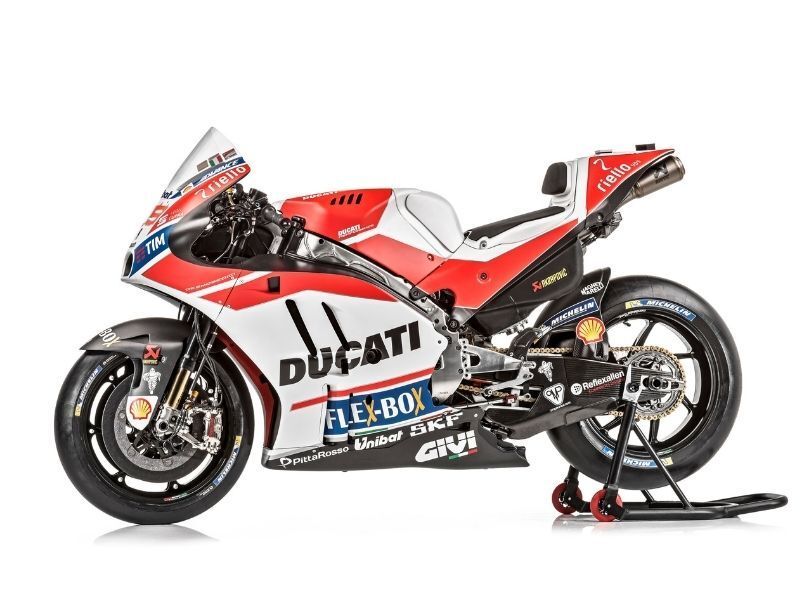
The pace of innovation under Audi ownership has been unusually high. The Panigale — successor to the 1098/1198 — launched in 2011 with a monocoque chassis and ride-by-wire throttle. The Panigale V4, launched in 2018, marked Ducati's first production V4 in almost a century, derived directly from the Desmosedici MotoGP bike.
The V4 R, in 2019, was briefly described as the most powerful production motorcycle in the world. The Superleggera V4, launched in 2020 as a limited-run hyper-exotic at over €100,000, was the first production motorcycle with a carbon fiber frame, swingarm, and wheels.
These aren't incremental improvements. They're the result of a Ducati that, under Audi ownership and with Volkswagen Group resources, has been able to think much more ambitiously about what its products should be.
MotoGP, World Superbike, and the V4 Era
The racing program has, if anything, accelerated.
Casey Stoner won Ducati's first MotoGP riders' championship =in 2007 on the Desmosedici GP7. That was a remarkable achievement — Ducati had only returned to the premier class in 2003, and Stoner's title came against riders on bikes from manufacturers with decades of MotoGP experience.
The years that followed were difficult. The Desmosedici was famously challenging to ride — Stoner's success was, in part, attributed to his ability to extract performance from a machine that other riders found intractable. Valentino Rossi's two-year stint at Ducati (2011–2012) was widely considered a career low point for one of the sport's greatest riders, and ended with Rossi returning to Yamaha.
The turnaround came under team manager Gigi Dall'Igna, who joined from Aprilia in late 2013. Dall'Igna restructured the engineering approach, brought in winglets and aerodynamic development that the rest of the paddock initially mocked and then copied, and methodically rebuilt the Desmosedici into a competitive machine.
Francesco Bagnaia won the MotoGP riders' championship for Ducati in 2022 and 2023 — Ducati's first riders' titles since Stoner in 2007, and Bagnaia's were the first for an Italian rider on an Italian motorcycle in MotoGP, which is the kind of detail that matters quite a lot in Italy. Jorge Martín, riding a satellite Ducati for Pramac, won the 2024 championship, marking three straight years in which the title went to a Ducati. By the mid-2020s, Ducati's MotoGP program had become the dominant force in the series — frequently filling the front row of the grid, regularly winning races and championships, and supplying engines to multiple satellite teams.
In 2025, Marc Márquez — the eight-time world champion who had spent his entire previous career at Honda — joined the factory Ducati team alongside Bagnaia. He won the championship with five races to spare. It was Márquez's first title in six years, the longest drought between titles for any premier-class rider, and Ducati's fourth consecutive riders' championship.
In World Superbike, the Panigale V4 R has continued the heritage that the 851, 888, 916, 996, and 1098 established before it. Álvaro Bautista won championships in 2022 and 2023.
The cumulative numbers are staggering. Ducati has won more World Superbike manufacturer titles than any other brand, and its riders have won more World Superbike riders' championships than the riders of any other brand. The racing dominance that started with Roche in 1990 has been almost continuous for over three decades.
What Makes a Ducati a Ducati
After almost a century of motorcycles, certain things have become consistent.
The L-twin engine layout remained Ducati's signature for over fifty years, and even with the V4 platforms now occupying the top of the range, the L-twin still defines the heart of the Monster, Hypermotard, Scrambler, and many SuperSport models. The desmodromic valve system is on every model that matters. The steel trellis frame — once Taglioni's signature, then refined by Tamburini, then evolved through dozens of model generations — gives way to monocoque and aluminum designs on the highest-performance platforms but remains visually and mechanically central to the brand's identity.
The visual language has its own through-line. Even bikes designed by completely different teams in different decades — the 916, the Panigale, the Streetfighter V4 — feel recognizably like Ducatis. The aggression is there. The single-sided swingarms, the underseat exhausts (where they still exist), the headlight treatments, the way the bodywork emphasizes the trellis or monocoque structure rather than hiding it.
There's also something harder to articulate — a sense that every Ducati, from the smallest Scrambler Sixty2 to the Superleggera V4, is built around a specific idea of what a motorcycle should feel like. Not all riders agree with that idea. Plenty of people prefer the smoothness of an inline-four or the relaxed character of a parallel twin. Ducati doesn't really care. The bikes are designed for people who want what Ducati is offering, not for the median customer.
This consistency of character, sustained through nationalization and bombing damage and government ownership and bankruptcy and three different private equity firms and finally a German automotive conglomerate, is one of the more remarkable continuity stories in modern manufacturing.
Models by Type
Ducati has a long history of making motorbikes, and they're known for their style, speed, and reliability. There are several types of Ducati motorcycles, and each one has its unique characteristics.
Ducati Monster
The Monster is the most popular Ducati motorcycle. It was first released in 1993, as a naked bike model with a large capacity engine and it has been produced every year since then. The Monster is known for its high-quality construction and reliability. It comes with a range of different engines, some of which are very powerful while others are more economical. You can choose between a standard model or an S model (which stands for sport). This is a great all-around bike that can be used for touring or commuting to work. Examples include Monster, Monster Plus, 1200, 1200 S.
Ducati Scrambler
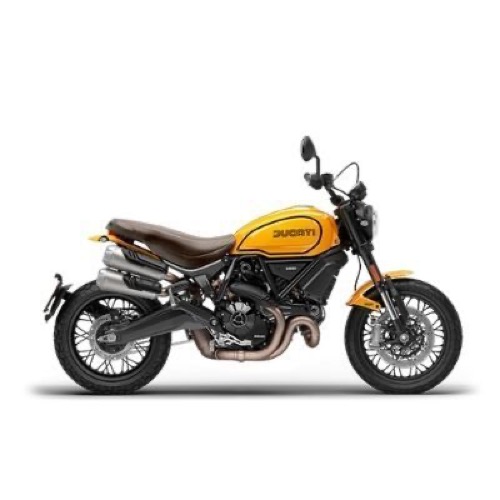
The Scrambler is a classic Ducati that was designed with off-road adventures in mind. It's fast and powerful, but it also can handle almost any terrain. The ‘S' model has a single-cylinder engine with two valves per cylinder, and the ‘D' model has a twin-cylinder engine with four valves per cylinder. The Scrambler can take you through sand and mud without getting stuck. It's perfect for when you're out on a mountain trail or riding through the woods.
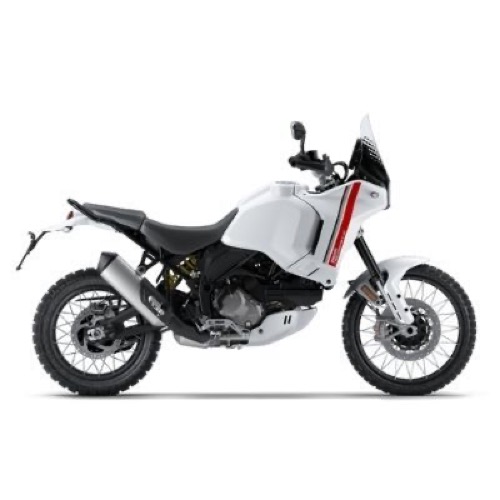
DesertX
These bikes are designed for long-distance riding in the desert, so they have a high ground clearance and are built for speed on rough terrain. The bike has a rear tire that is wider than the front tire, allowing it to float over sand with ease. They also have an adjustable seat height that can be lowered for better control when riding off-road. These bikes are available in both naked and streetfighter versions.
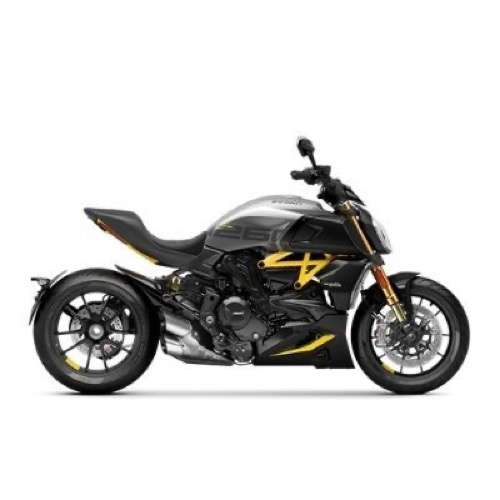
Diavel
The Diavel is one of Ducati's most popular motorcycles among riders who want something unique. It has a sporty, muscular design that looks like it's ready to take off on its own—and it does not just look. This bike is designed for high-speed riding and long distances, so if you're looking for something with great power and excellent handling, this might be your pick. The line includes 1260, 1260 S, Diavel 1260 Lamborghini.
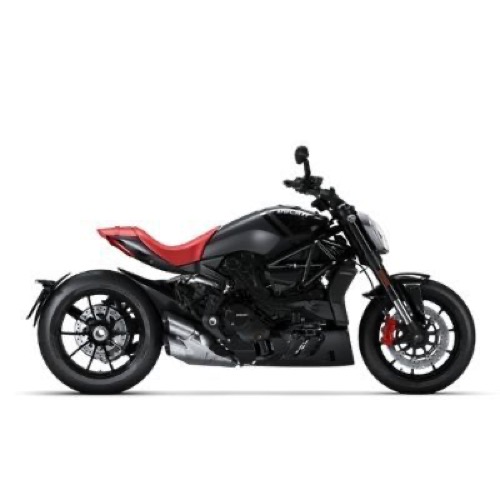
XDiavel
The XDiavel was created as an updated version of the Diavel. The changes include more power and torque to give you more control over your ride at higher speeds, as well as redesigned bodywork that makes it easier to get into tight spaces when parking or turning corners. It also features more comfortable seats than its predecessor. Examples include Nera, XDiavel, XDiavel S, XDiavel Black Star.
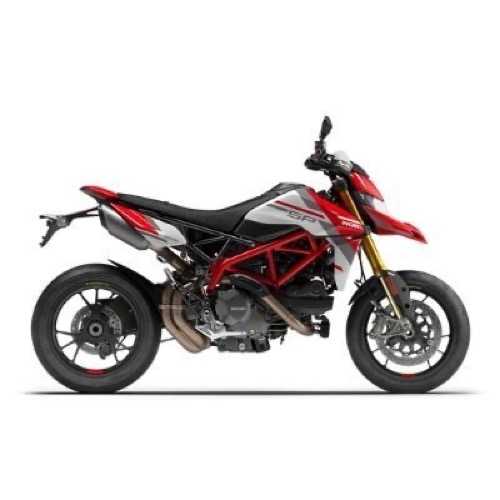
Hypermotard
The Hypermotard is a street-ready motorcycle with an off-road racing pedigree. It's built for speed and agility, but it can also handle rough terrain with ease. It has a compact frame, a narrow seat, and an upright riding position that makes it easy to handle in tight spaces. If you're looking for a versatile bike that can take on any road or trail, this is the one for you. The line includes 950, 950 SP, and 950 RVE.
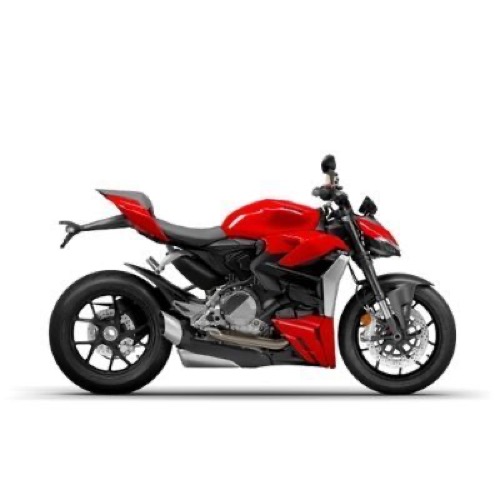
Streetfighter
If you're looking for a bike that can do it all, this is one option that should be considered. The Streetfighter is built for speed with its high-performance engine, but it also has plenty of room for storage if you need to carry things around with you on your trip. The Streetfighter has an excellent braking system as well as suspension systems that allow riders to take corners at higher speeds than other models would. Examples include Streetfighter V2, V4, V4 S, and V4 SP.
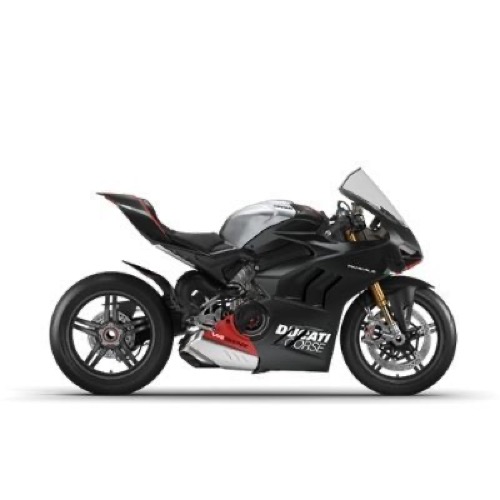
Panigale
The Panigale is a line of sportbikes that come in several different styles and performance levels. They are known for their lightweight design, powerful engine, and high performance, which makes them perfect for racing and riding on open roads. The line includes Panigale V2 Bayliss, V2, V4, V4 S, V4 SP, and Superleggera V4.
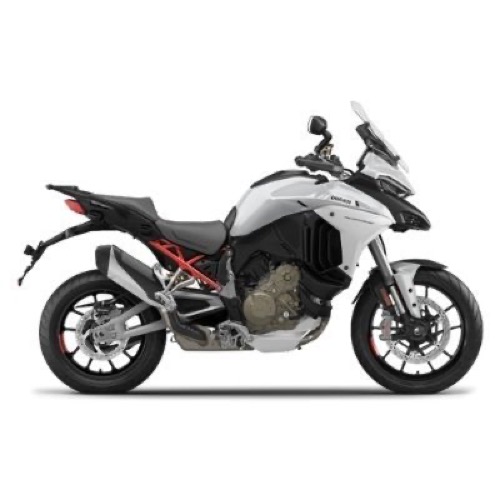
Multistrada
The Multistrada is a versatile bike that can be used on both paved roads and off-road terrain. It is equipped with an electronic suspension system that allows it to adjust its suspension depending on what kind of terrain you are riding on. This is a great choice for an adventure rider who wants to go off-road occasionally. The models also have plenty of room for luggage and passengers. They include 950, 950 S Spoked, Multistrada V2, V2 S, V4, V4 S, V4 S Sport, V4 Pikes Peak, and 1260 Enduro.
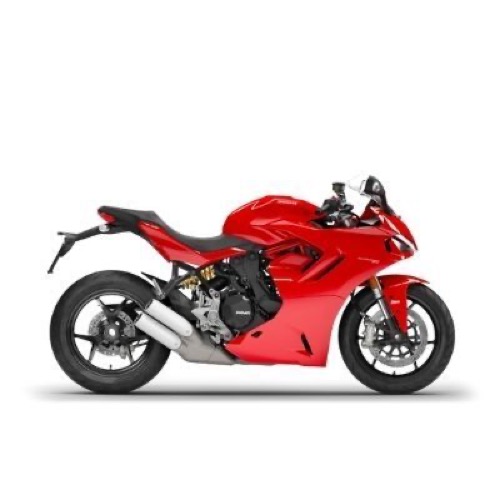
SuperSport
The SuperSport models from Ducati are designed with speed and agility in mind—whether that means racing on city streets or hitting the track on weekends. They come with an adjustable seat height so riders can find their optimal position when riding on the street or track. With its lightweight frame, powerful engine, and aerodynamic design, this motorcycle will get you where you need to go in record time. It includes Supersport 950, and 950 S.
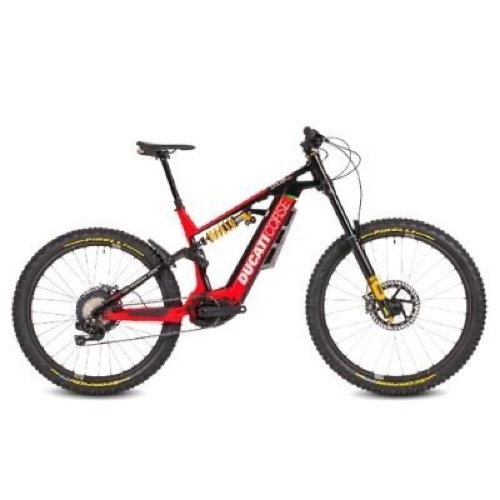
E-MTB
The E-MTB line offers electric mountain bikes with powerful motors that can go anywhere and last through any terrain. This bike is meant to be used off-road and offers great fuel efficiency while still providing excellent speed and power. The line includes Futa, MIG-S, TK-01RR, and E-Scrambler.
Key Milestones at a Glance
Antonio Cavalieri Ducati and his three sons (Adriano, Bruno, Marcello) found Società Scientifica Radio Brevetti Ducati in Bologna on July 4
Guglielmo Marconi visits Ducati during the First Italian Radio-technicians Conference
New Ducati factory built in Borgo Panigale district of Bologna
Operation Pancake — USAAF bombing campaign destroys the Borgo Panigale factory on October 12
Ducati acquires manufacturing rights to the Cucciolo engine from SIATA
Ducati nationalized by the Italian government
Ducati 60 — the company's first complete motorcycle — launches
Company splits into Ducati Meccanica SpA and Ducati Elettronica
Fabio Taglioni joins Ducati and designs the Marianna; production reaches 120 motorcycles per day
Ducati 100 "Siluro" sets multiple speed records at Monza
Tartarini and Monetti circumnavigate the world on two 175 T motorcycles
Taglioni develops Ducati's first desmodromic valve system
Ducati Mach 1 launches — fastest production 250cc road bike of its era
Ducati 750 GT launches — the first production L-twin
Paul Smart and Bruno Spaggiari finish 1-2 at the Imola 200
Ducati 750 SS ("Imola Replica") enters production
Mike Hailwood wins the Isle of Man Formula 1 TT on a 900 SS
Ducati Pantah launches with belt-driven camshafts
Castiglioni brothers' Cagiva Group acquires Ducati
851 launches — water-cooled, four-valve, fuel-injected L-twin
Raymond Roche wins Ducati's first World Superbike championship
Ducati Monster launches — creates the modern naked bike category
Ducati 916 launches — Tamburini's design becomes a sport-bike icon
Texas Pacific Group acquires 51% of Ducati for ~$325 million
TPG buys remaining shares to become sole owner
Ducati IPOs on the Milan stock exchange as Ducati Motor Holding SpA
Investindustrial acquires Ducati from TPG
Casey Stoner wins Ducati's first MotoGP riders' championship
Audi AG (Volkswagen Group) acquires Ducati for €860 million
Panigale V4 launches — first Ducati production V4 in nearly a century
Superleggera V4 launches with full carbon fiber chassis components
Francesco Bagnaia wins back-to-back MotoGP riders' championships
Jorge Martín wins MotoGP championship on a satellite Ducati
Marc Márquez wins MotoGP championship in his first season with the factory Ducati team — fourth consecutive title for the manufacturer
Check out our History of the Ducati Logo and our curated Ducati Gear .
Ducati FAQ
Who owns Ducati?
Ducati, known for its innovative precision machining and radio-electric products, is currently owned by German auto manufacturer Audi—since 2012—through its subsidiary in Italy, Lamborghini, which is itself a subsidiary of Volkswagen Group.
What was the first Ducati motorcycle?
Although the Cucciolo (Italian for "puppy") is often considered to be Ducati's first motorbike, the Ducati 60 can be credited as being the first motorcycle ever built by Ducati in 1949.
The Cucciolo (released in 1946) was the result of a collaboration between Ducati and SIATA, which Ducati purchased all manufacturing rights from. This was after SIATA became unable to meet the rising demand.
The 60-cc motorcycle—Ducati 60—featured an updated, improved Cucciolo engine as well as a three-speed gearbox and aluminum covers protecting the rocker arms. This bike was designed to be lightweight, versatile, and appeal to the female audience. The success of this model led to the birth of many other models that followed.
Why does Ducati use desmodromic valves?
Desmodromic valve actuation uses a second cam lobe to mechanically force valves closed, rather than relying on springs. The advantage is that valves close at a precisely controlled rate even at extremely high engine speeds, eliminating the "valve float" that can occur with conventional spring-actuated valves at high RPM. Ducati's chief engineer Fabio Taglioni began developing desmodromic systems in the late 1950s, and the technology has been a defining engineering signature for the brand ever since. While modern materials have made conventional valve springs adequate for most applications, Ducati has continued using desmo because it remains a meaningful performance advantage at the highest engine speeds and because it has become central to the brand's identity.
Learn about the history of the Ducati logo or shop for Ducati gear .