There's a story KTM people love to tell. It's 2020, the Czech Grand Prix at Brno, and a 25-year-old South African rookie named Brad Binder crosses the line first on a motorcycle that essentially no one in the paddock believed had any business being there. The bike had a steel trellis frame — steel, in a field that had long since moved to aluminum — and ran suspension developed in-house rather than sourced from the Swedish supplier nearly every other manufacturer used. KTM had entered MotoGP three years earlier as an outsider, absorbed years of criticism about their approach, and then sent a rookie out to win their first premier class race.
That's KTM in miniature. Stubborn, technically opinionated, perpetually underestimated, and occasionally right in ways that make everyone else look foolish.
The full story starts much earlier, in a small Austrian town, with a man who was fixing diesel engines to survive a war.
The Machinist from Mattighofen (1934–1952)
Hans Trunkenpolz was an engineer by trade. In 1934, he set up shop in Mattighofen — a market town in Upper Austria that most people outside the country couldn't place on a map — as a repair shop and dealership handling DKW motorcycles and Opel cars. The business wasn't registered, wasn't glamorous, and by most measures wasn't destined for anything particularly remarkable.
Then the war came.
While Hans was presumably occupied with the broader catastrophe of 1939–1945, his wife ran the shop. What kept them solvent was diesel engine repair work — the kind of unglamorous, hands-dirty mechanical work that the war economy demanded. When it ended and that work dried up almost overnight, Trunkenpolz faced a choice familiar to anyone who's ever run a small business through a crisis: pivot or die.
He chose to build motorcycles.
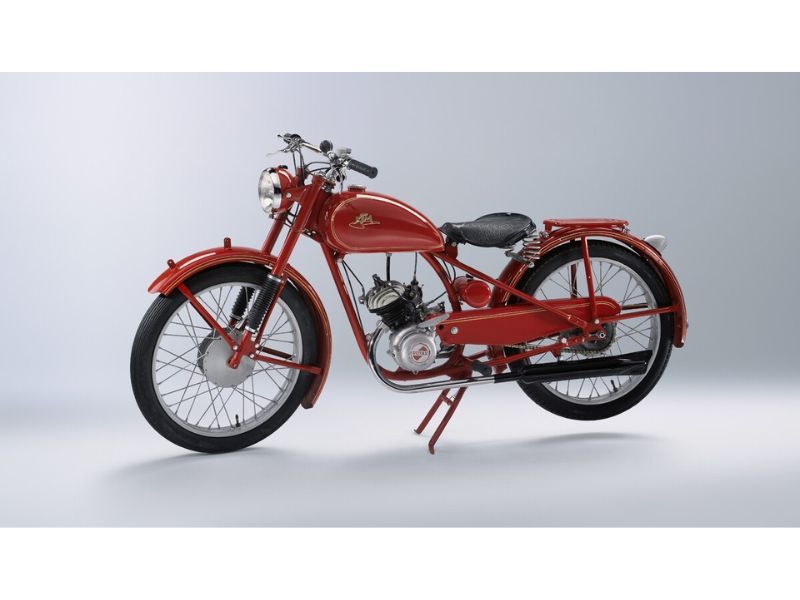
The first prototype, the R100, came in 1951. It ran a 98cc Rotax engine made by Fichtel & Sachs — KTM built the rest of the bike themselves, but they didn't have the capacity to make their own powerplant yet. Three years of development and preparation followed before mass production started in 1953, with 20 employees turning out roughly three bikes a day.
That number — three bikes a day — is worth sitting with for a moment. KTM is now one of the largest motorcycle manufacturers in Europe. Every one of those machines traces a direct line back to a workshop in Mattighofen and a man making do.
Ernst Kronreif and the Real Founding (1953–1960)
The name KTM doesn't actually come from Hans Trunkenpolz alone. In 1953, a businessman named Ernst Kronreif purchased a majority stake in the company and it was formally registered as Kronreif & Trunkenpolz Mattighofen. That's what KTM stands for, even if today most people have never thought about it.
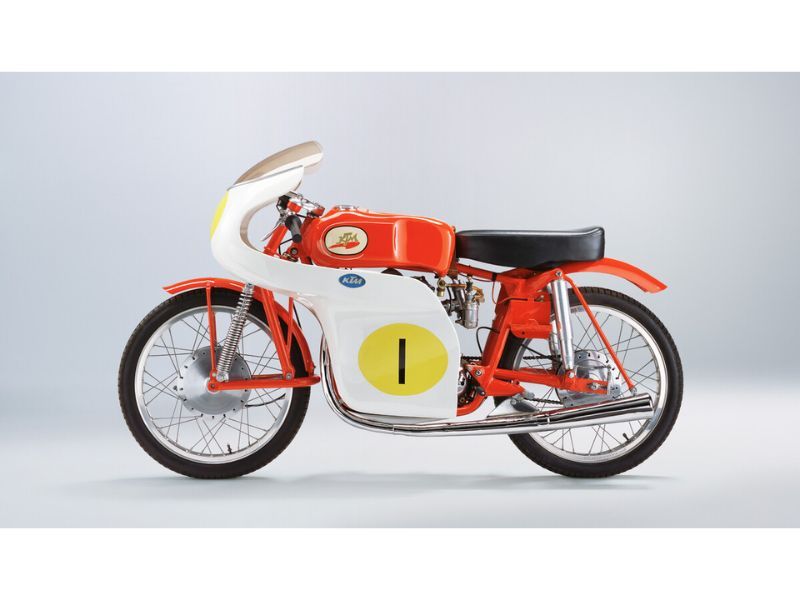
Kronreif mattered beyond the letterhead. He brought the commercial structure and investment that allowed Trunkenpolz's engineering instincts to actually scale. The R125 Tourist came in 1954. The Grand Tourist and the Mirabell scooter followed in 1955. That same year, KTM won its first racing title at the Austrian 125cc national championship — a result that probably seemed modest at the time and looks, in retrospect, like the opening move in a very long game.
1956 brought KTM's first appearance at the International Six Days Trials, the grueling off-road event that was essentially the Olympics of motorcycle sport for much of the 20th century. They won a gold medal with Egon Dornauer. Not bad for a company that had been building three bikes a day just three years earlier.
By the late 1950s, Kronreif's health was failing. He died in 1960, the same year Hans Trunkenpolz suffered a serious heart attack (Trunkenpolz himself died in 1962). The company that bore both their names had grown substantially, but now faced the difficult question of what comes next when the founders are gone. Erich Trunkenpolz, Hans's son, took the helm.
Building the Machine — and Eventually the Engine (1960–1980)
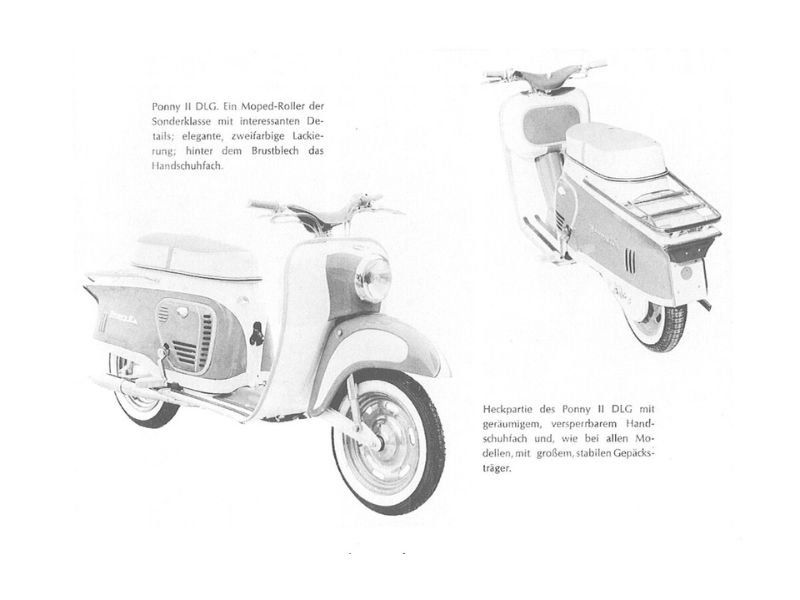
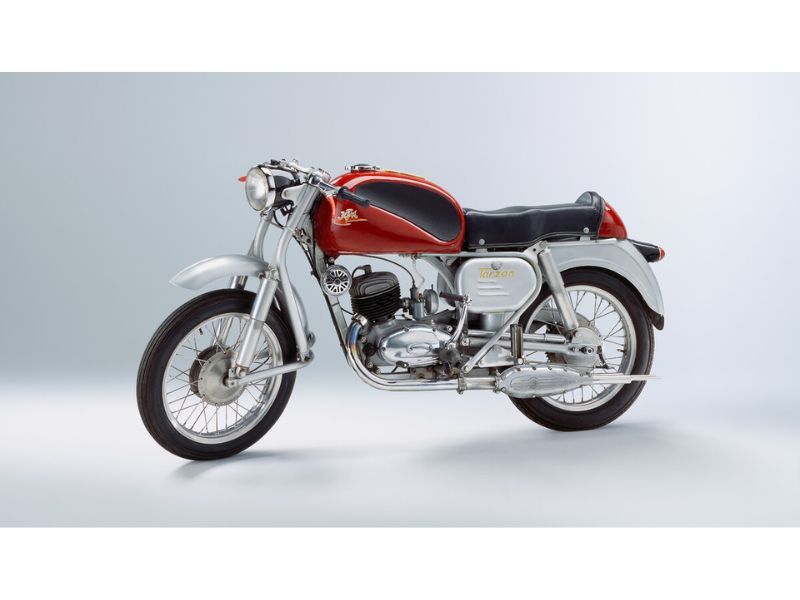
Through the 1960s, KTM expanded in several directions at once. They started making bicycles — still a separate business entity today — and pushed further into mopeds and sports motorcycles. The 125cc Trophy and the Mecky moped line did well. The Ponny models and the Comet followed.
But there's a technical milestone from this era that the standard KTM history tends to either bury or skip entirely: until 1970, KTM was essentially an assembler, not a manufacturer in the full sense. They built frames, bodywork, and much of the motorcycle, but the engines came from Fichtel & Sachs or Rotax. In 1970, that changed. KTM started building their own engines.
This matters more than it might seem. Engine development is where motorcycle manufacturers actually define themselves — where the engineering culture gets expressed, where the trade-offs between power, weight, reliability, and character get made. Once KTM controlled their own powerplants, they stopped being dependent on supplier decisions and started being able to build exactly the machines the racing department wanted.
By 1971 the company had 400 employees and 42 different models. Through the 1970s and into the '80s, they were also supplying engines and radiators to European car manufacturers — a revenue stream that would later become one of the four independent businesses when the company eventually collapsed.
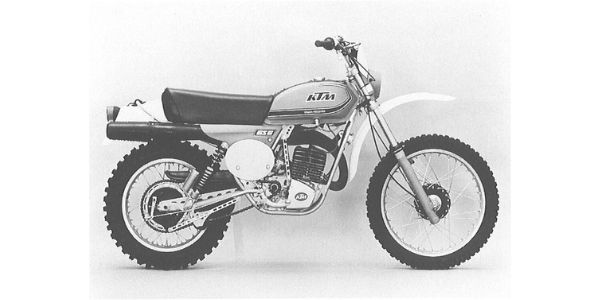
The racing results were stacking up. KTM's off-road and motocross programs were winning at every level they entered. The company that Trunkenpolz had started as a repair shop was, by any meaningful measure, a proper motorcycle manufacturer.
The LC4: The Engine That Made Modern KTM (1987)
Before getting to the bankruptcy, it's worth pausing on an engine, because one engine more than any other built the road to recovery.
The LC4 — liquid-cooled four-stroke — first appeared in 1987 in the GS 600. Up to that point, KTM was essentially a two-stroke company. Brilliant at two-strokes, serious about two-strokes, but two-strokes nonetheless. The LC4 was a statement that they were going somewhere else.
It was a single-cylinder four-stroke that became the platform for basically everything KTM did with road and adventure bikes for the next two decades. The Duke line that launched in 1994? LC4. The Adventure models? LC4. The Supermoto versions? LC4. That engine was so adaptable, so right as a starting point, that KTM kept developing it long after most manufacturers would have moved on.
There's something almost perverse about the timing — KTM introduced their most consequential road bike engine just as the company was heading toward a financial crisis that would nearly destroy them. But the LC4 survived the crash, and it became the foundation on which the rebuilt company stood.
The Collapse and the Split (1988–1992)
The moped market fell apart in the 1980s. This wasn't specific to KTM — it was a European-wide phenomenon as scooter and moped sales declined sharply across the board — but KTM was heavily exposed to that segment and couldn't find a way through.
Production halted in 1988. An Austrian investment trust managed by politician Josef Taus acquired a majority stake in 1990 and tried to turn things around. It didn't work. By 1991, a consortium of creditor banks had taken control of a company drowning in debt.
In 1992 came the split. KTM was divided into four independent businesses:
- KTM Sportmotorcycle GmbH — motorcycles
- KTM Kühler GmbH — radiators
- KTM Fahrrad GmbH — bicycles
- KTM Werkzeugbau GmbH — tooling and manufacturing
The radiator business, now operating as WP Radiators, eventually rejoined the KTM Group. The tooling division did too. The bicycle company found different investors — eventually Chinese ones — and remains independent today. Which means that if you've ever bought a KTM bicycle, you're technically dealing with a completely separate company.
The motorcycle division — the bit most people care about — was acquired by KTM Motorradholding GmbH, a subsidiary of Stefan Pierer's Cross Industries. And that's where the modern story begins.
Stefan Pierer and the Orange Identity (1992–2000)
Stefan Pierer didn't just stabilize a struggling motorcycle company. He did something more interesting: he figured out what KTM actually was and built the whole enterprise around that answer.
The answer was racing. Not racing as a marketing exercise — racing as a genuine operating principle. "Ready to Race" wasn't invented as a slogan for an advertising campaign. It was, in Pierer's telling, a description of what KTM made and why. Every production model was supposed to be credible as a racing machine or a direct descendant of one.
Pierer commissioned KISKA Design — an Austrian firm that has remained KTM's design partner to this day — to build a visual identity to match. The orange color was applied to motocross models in 1996 and became the most recognizable brand signature in off-road motorcycle sport. Go to any motocross race in the world and you'll see it. It's that specific shade of orange that says exactly one thing.
Duke production started in 1994, built on the LC4 engine and pitched directly at the naked bike market that was just starting to heat up in Europe. White Power Suspension was acquired in 1995, along with Swedish manufacturer Husaberg — the first of what would become a pattern of strategic acquisitions. By 1997, KTM had liquid-cooled Supermoto and Adventure models in production.
The 1996 introduction of the orange wasn't just cosmetic. It was a line in the sand. Before orange, KTM was a revived company trying to find its feet. After orange, it was a brand.
The PDS Debate: Engineering with Opinions
In 1997, KTM introduced the Progressive Damping System — PDS — on the Jackpiner. It eliminated the rear linkage entirely, a design choice that reduced weight and improved ground clearance but that the broader motorcycle world greeted with a certain amount of skepticism.
The debate has never really ended. KTM still uses PDS on enduro bikes and a conventional linkage setup for motocross, which tells you something about their actual conclusions — it's not a universal solution, it's a specific one for specific conditions. But the fact that they developed it at all, defended it against considerable criticism, and kept it for specific applications rather than abandoning it to please reviewers is very KTM.
This is a company that has always been willing to be technically wrong in interesting ways rather than technically correct in boring ones. Sometimes that works brilliantly. Sometimes it costs them race wins. They seem to consider this an acceptable trade-off.
Dakar and the Desert (2001–Present)
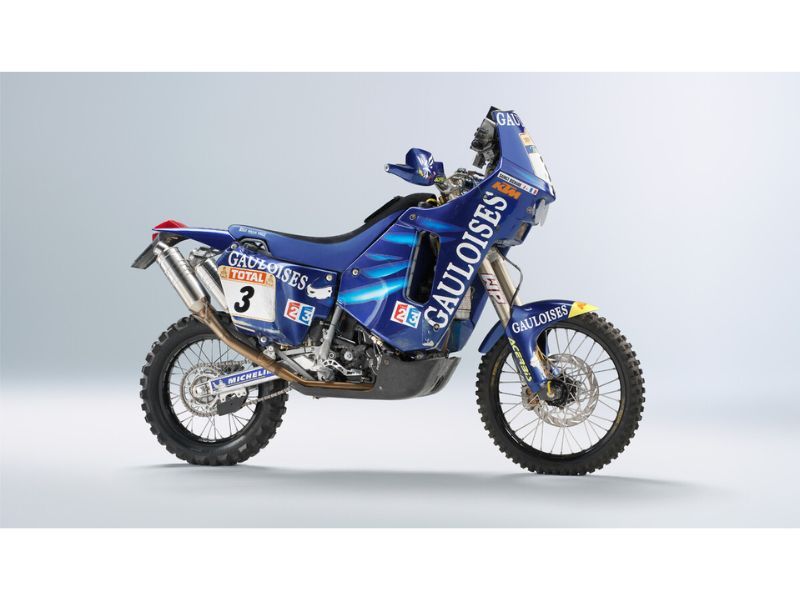
KTM first appeared at the Dakar Rally in 1994. They were not immediately dominant. But they learned fast, and what followed was one of the longest winning streaks in motorsport history: 18 consecutive Dakar victories from 2001 through 2019.
Eighteen. Consecutive. Years.
To put that in context: there are professional racing careers that didn't span that length of time. The Dakar Rally — which by 2009 had moved from the Paris-Dakar route to South America due to security concerns, and has since moved again to Saudi Arabia — is genuinely brutal. Mechanical attrition, navigation errors, and the sheer physical punishment of covering thousands of kilometers across desert terrain eliminate most competitors. KTM won it eighteen times in a row.
They were knocked off the top step in 2020 when Honda won, but KTM riders were back on the podium and continued to be a dominant force. The brand's connection to the Dakar isn't marketing. It's the actual reason their adventure and rally bikes are designed the way they are.
The LC8 and the Road to "The Beast"
The LC4 single-cylinder was followed eventually by the LC8 — an 1148cc parallel twin that launched in the 950 Adventure in 2002. This was KTM's first serious attempt at a large-capacity road bike, and it worked well enough that the engine family kept growing: the 990, then the 1090, eventually reaching the 1290 Super Duke R.
"The Beast" is what people call the 1290 Super Duke R, and it's not hard to understand why. The standard version makes around 180 horsepower from a V-twin configuration and weighs considerably less than most litre-class bikes. It's not a subtle machine. The whole LC8 lineage — from an adventure bike designed for long-distance desert riding to one of the most aggressive naked bikes in production — is a good illustration of how KTM's engineering culture treats a platform as something to keep pushing until it breaks, then push a bit more.
The MotoGP Gamble (2017–Present)
KTM announced their entry into the MotoGP premier class in 2017 with the RC16. The reaction from observers was politely skeptical at best. They had a steel trellis frame when everyone used aluminum. Their suspension was developed in-house through WP rather than sourced from Öhlins. They were building a new prototype from scratch to compete against manufacturers who had been developing their MotoGP machines for years or decades.
The first seasons were difficult. Development was slower than hoped. Critics noted that KTM seemed to be doing everything the hard way.
Then, on August 9, 2020, at Brno, Brad Binder won the Czech Grand Prix. KTM's first MotoGP premier class victory, taken by a rookie on a bike that still divided opinion about its basic design choices.
It's probably the most KTM thing that has ever happened.
The MotoGP program has continued to develop. By the mid-2020s, the RC16 is genuinely competitive — no longer a curiosity or a plucky underdog but a machine capable of winning races and challenging for championships. The steel trellis frame is still there.
Building the Empire: Husqvarna, GasGas, and the Pierer Mobility Group
The acquisitions started early. Husaberg in 1995. White Power Suspension the same year. But the big moves came later.
In 2007, Indian manufacturer Bajaj Auto purchased a 14.5% stake in KTM Power Sports — a partnership that enabled KTM to produce bikes in India at price points the Austrian factory couldn't touch, and to access one of the fastest-growing motorcycle markets in the world. By 2013, Bajaj's stake had grown to just under 48%.
Also in 2013, KTM acquired Husqvarna Motorcycles from BMW Motorrad. Husqvarna is one of the oldest motorcycle brands in the world — founded in Sweden in 1903, with a heritage in off-road competition that rivals KTM's own — and it came with loyal customers, established racing credentials, and engineering that was, honestly, quite good. KTM absorbed it and the Husaberg brand alongside, building a multi-brand off-road strategy that would prove significant.
GasGas came in 2019. The Spanish brand had a strong reputation in trials and enduro, and its addition completed what Pierer Mobility — the renamed parent group — was building: a portfolio of off-road brands covering different price points and market positions, running largely on shared engineering platforms with differentiated character.
Today, KTM, Husqvarna, and GasGas essentially share engine platforms with careful calibration to give each brand distinct characteristics. Critics call this badge engineering. The counterargument is that it's exactly what the major Japanese and European manufacturers have been doing for decades, just done openly.
In 2024, Pierer Mobility took a majority stake in MV Agusta — the Italian manufacturer famous for some of the most beautiful and expensive motorcycles ever made. It was a significant move into the premium segment, positioning the group as something genuinely different from a pure off-road specialist.
A joint venture with CFMoto in China handles production of the 790 and 890 engine family, a practical arrangement that keeps costs manageable for mid-capacity models while maintaining Austrian engineering oversight.
The 2024–2025 Crisis: History Rhyming
In late 2024, the parallels with 1991 became uncomfortable.
Pierer Mobility — the parent group that includes KTM, Husqvarna, GasGas, and the MV Agusta stake — entered court-supervised restructuring in early 2025. Heavy debt and high interest rates had created a situation that the group couldn't resolve internally. Stefan Pierer, who had run the motorcycle division since the 1992 recovery and who was more than any other individual responsible for the brand's transformation, stepped down as CEO.
What happens next isn't fully clear as of writing. Bajaj Auto — with nearly 50% ownership of Pierer Mobility — is the most likely source of the stability the group needs, which probably means a shift in the balance of corporate control toward India. Whether that changes what KTM actually makes is a different question. The engineering culture at Mattighofen has survived ownership changes before.
The last time KTM faced existential financial pressure, in 1991, the company emerged split into four pieces, one of which built itself back into a global brand. The circumstances are different now — the brand is worth infinitely more, the racing programs are at full strength, the model range is broader than it's ever been — but the underlying story is familiar. A company that built its identity on refusing to fail at the things it cares about, confronting another test of that identity.
The Electric Question
The Freeride E-XC has been in KTM's lineup since around 2012 — one of the earliest electric off-road bikes from any established manufacturer. It hasn't become a mainstream product. The range and power delivery limitations that make electric powertrains challenging for off-road use haven't been fully solved, and KTM has been honest about that rather than overselling it.
But they kept developing it. Quietly, persistently, in the way that KTM tends to do things they're not entirely sure about yet. Whether that leads to a serious electric off-road program in the next decade is an open question. The Freeride E-XC suggests the answer isn't no.
The Brand Identity: What Orange Actually Means
It would be easy to dismiss the color as branding. It's not.
When Pierer and KISKA Design chose to paint the motocross bikes orange in 1996, they were making a statement about what kind of company KTM was going to be. Racing-first. Visually distinctive. Unwilling to be confused with anyone else. The orange isn't the brand — it's the expression of the brand, which is something that was built through 18 Dakar wins and a steel-framed MotoGP bike and a bankruptcy that most companies wouldn't have survived.
"Ready to Race" is a slogan, yes. But it's also a reasonably accurate description of how KTM has approached product development for the better part of 30 years. The road bikes handle like the off-road bikes, because the engineers who built the off-road bikes also built the road bikes and they have opinions about what a motorcycle should feel like. The adventure bikes are credible off-road, because the adventure bikes have to survive a category that's full of people who actually go off-road.
This consistency of character — the sense that every KTM product comes from the same basic set of values, whether it's a 50cc children's bike or a 1290cc supernaked — is genuinely unusual in a market where brands often lose coherence as they scale.
Key Milestones at a Glance
Hans Trunkenpolz opens a repair shop in Mattighofen, Austria
First motorcycle prototype, the R100, using Fichtel & Sachs/Rotax engines
Mass production begins; Ernst Kronreif joins, company registered as KTM
First racing victory, Austrian 125cc national championship
Gold medal at the International Six Days Trials
KTM begins manufacturing its own engines
LC4 liquid-cooled four-stroke debuts in the GS 600
Moped market collapse forces production halt
Creditor banks take control
Company splits four ways; Stefan Pierer acquires motorcycle division
Duke production begins; KTM first enters Dakar Rally
Husaberg and White Power Suspension acquired
Signature orange introduced on motocross models
PDS suspension introduced; liquid-cooled Adventure and Supermoto models launched
First of 18 consecutive Dakar Rally wins
LC8 twin engine debuts in the 950 Adventure
Bajaj Auto acquires initial stake in KTM
Husqvarna acquired from BMW; Bajaj stake grows to ~48%
KTM enters MotoGP premier class with the RC16
GasGas acquired
Brad Binder wins KTM's first MotoGP premier class race at Brno
Pierer Mobility takes majority stake in MV Agusta
Pierer Mobility enters court-supervised restructuring; Stefan Pierer steps down as CEO
Models by Type
KTM has built a reputation for making some of the best motorcycles in the world, known for their performance and durability. The company offers a wide range of motorcycles popular with riders of all skill levels. From off-road enthusiasts to commuters looking for a fun weekend ride. Here are KTM's three main lines of motorcycles.
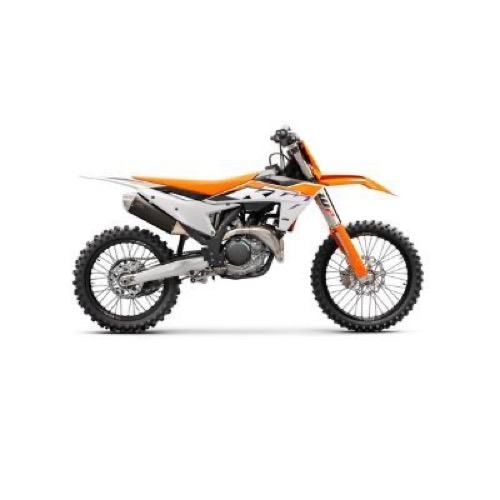
Motocross
The KTM Motocross line is designed for the off-road enthusiast who wants a bike that can handle a variety of terrain.
These bikes are designed to handle everything from hard-packed dirt to deep mud and sand. The engine has also been designed to be lightweight, so the rider doesn't have to worry about losing power or speed on rough terrain.
KTM's motocross lineup comprises the SX (50, 65, 85, 105, 125, and 150) and the SX-F (250, 350, and 450) models.
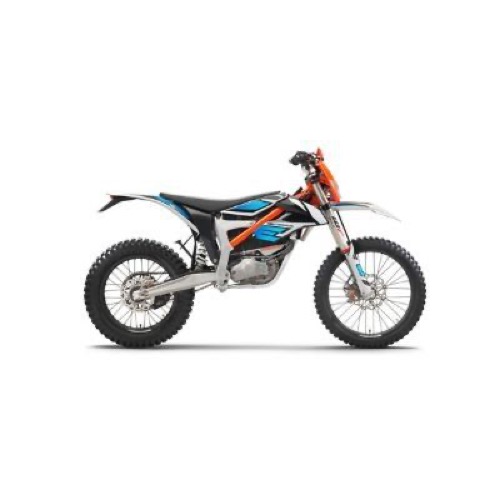
Enduro
These motorcycles are built for long journeys through the wilderness. They're optimized for comfort, with wide seats and suspension that is forgiving over bumps.
Enduro bikes also have powerful engines that can go long distances without overheating or breaking down.
KTM offers several enduro models including street-legal versions. The KTM Enduro line comprises four-stroke 250, 350, 450, and 500cc models (EXC-F and XCF-W) and two-stroke 150, 250, and 300cc models (EXC and XC-W).
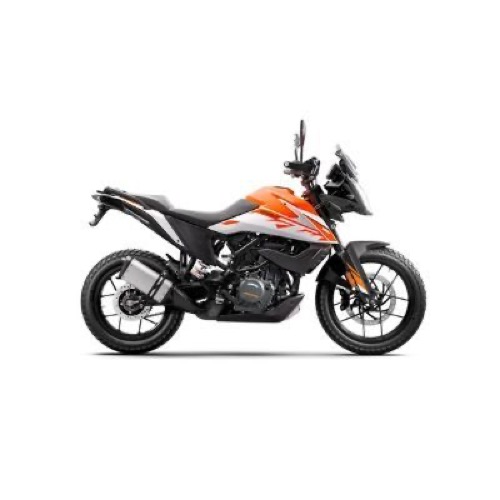
Cross Country
Cross Country models are designed to take on long trips over difficult terrain while still being able to handle most of what they encounter along the way.
With sturdier suspensions than other KTM models, they can handle more abuse without sacrificing performance or comfort.
This line includes the 150 XC, 250 XC, 300 XC, 250 and 300 XC TPI, 250 XC-F, 350 XC-F, and the 450 XC-F.
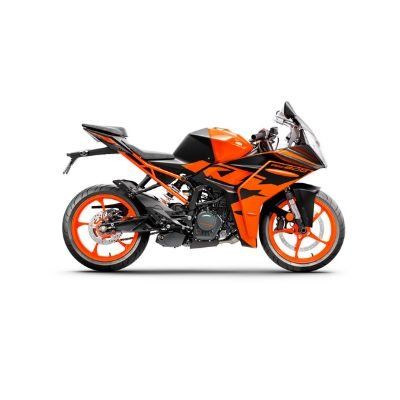
2022 KTM RC200
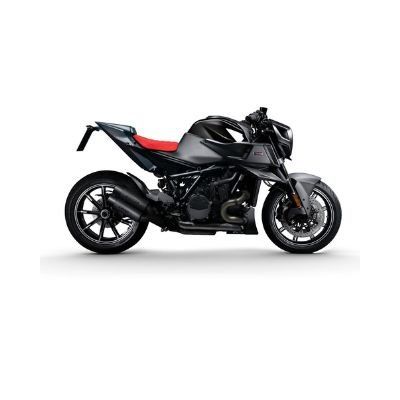
KTM Brabus 1300R
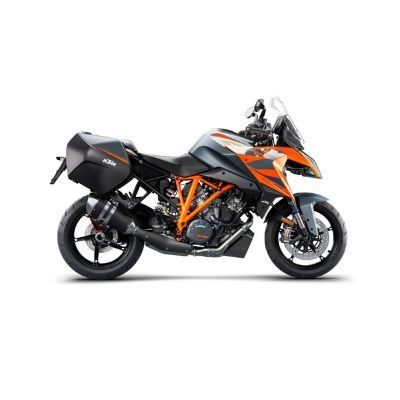
2022 KTM 1290 Super Duke GT
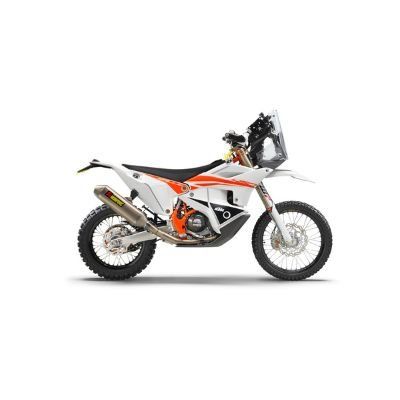
2019 KTM 450 Rally RI90 DI
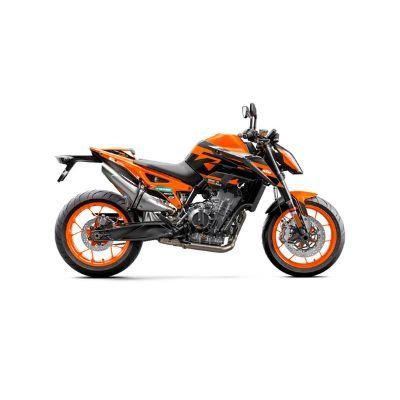
2022 KTM 890 Duke GP
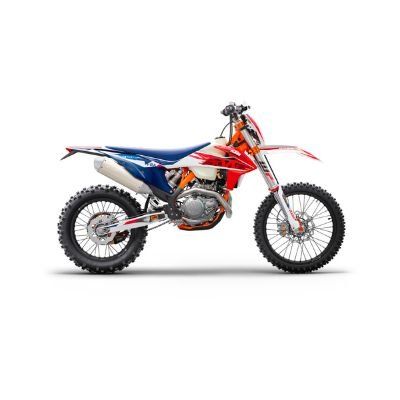
2023 KTM 500 EXC F Six Days
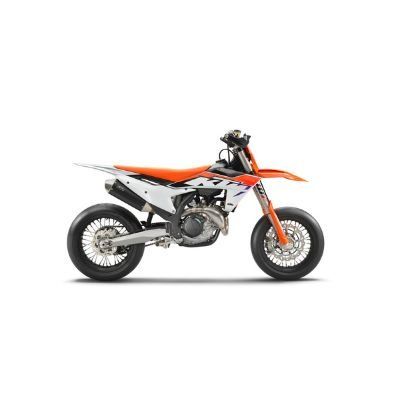
2023 KTM 450 SMR 90DE RI
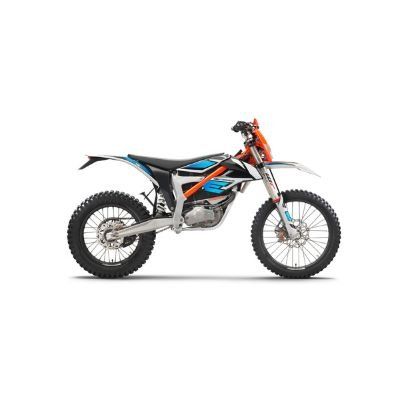
2020 KTM Freeride E XC
View more
KTM FAQ
What does KTM stand for?
KTM is a motorcycle manufacturer, and it stands for Kronreif & Trunkenpolz Mattighofen. The Austrian company was originally known as Kraftfahrzeug Trunkenpolz Mattighofen. However, the name was not registered. It changed and registered its name in 1953 to Kronreif & Trunkenpolz Mattighofen (which it still uses today). This was after businessman Ernst Kronreif became a majority shareholder of the company.
How many Dakar Rallies has KTM won?
KTM won 18 consecutive Dakar Rallies from 2001 through 2019 — a run of dominance in one of motorsport's most demanding events that has no real parallel. They have remained competitive in the years since, though Honda broke the streak in 2020.
Is KTM in financial trouble?
The parent company, Pierer Mobility, entered court-supervised restructuring in early 2025 following significant debt accumulation. Stefan Pierer stepped down as CEO. KTM's major shareholder Bajaj Auto, which holds close to 50% of Pierer Mobility, is expected to be central to any resolution. Production and racing programs continued during the restructuring process, and the outcome remains developing as of writing.
Learn about the history of the KTM logo .


